
How Much Does Control4 Cost? An Honest UK Price Guide

Control4 can cost as little as £1,500 for a basic single-room setup, but a fully integrated smart home can easily run into hundreds of thousands of pounds. And in some cases, millions.

We've been installing Control4 at Inspire Audio Visual for almost 20 years, and one thing we've learned is that it's important to distinguish the cost of Control4 itself from the cost of the technology it's controlling.
Control4 is essentially the brain and user interface of your smart home. Its real strength is bringing lighting, heating, music, televisions, blinds and countless third-party products together into one simple, consistent interface.
It's actually very good at this, and compared with other professional home automation platforms, we still think it offers some of the best value for money.
But what does it really cost?

What Does a Control4 Installation Cost in the UK?

Installation Type Typical Project Budget (ex VAT)
Basic single-room Control4 setup From around £1,500
Smaller home or luxury apartment Around £25,000
Typical larger Inspire AV installation £80,000–£100,000
Large luxury property £250,000+
Extensive bespoke smart home Potentially £1 million+
These aren't fixed packages or industry averages. They're indicative budgets based on the types of projects we work on, including equipment, design, cabling, installation, programming and project management.
And importantly, these are the costs of complete technology installations, not just Control4 hardware.
A £25,000 project might include a couple of televisions, soundbars, whole-home lighting control and some heating or blind integration.
A £100,000 installation could include multi-room audio and video, lighting, heating, networking and other integrated systems throughout a considerably larger property.
At £250,000 and beyond, the Control4 interface might be almost identical. It's the quantity, specification and quality of the equipment behind it that changes.

Can You Really Get Control4 for £1,000?

You'll occasionally see Control4 advertised as a £1,000 smart-home system. That's not entirely wrong, but we think it needs some context.
For example, a Control4 CORE Lite controller and Halo Touch remote bundle has a retail price of around £1,141 excluding VAT.
Allow another £300 for half a day's programming to control your existing television and you're at approximately £1,441 excluding VAT.
Want to add a smart lighting keypad controlling two lighting circuits? That's another £475, taking our example to around £1,916 excluding VAT.
So yes, you can get started with Control4 for relatively little money.
But at that price, you're primarily purchasing a more sophisticated way of controlling equipment you already own.
You're certainly not getting an entire automated home.
These are illustrative hardware and programming prices, subject to the final specification and any additional installation requirements.

Why Can Control4 Cost So Much?

The simplest explanation is that you're continually adding functionality.
A small property might need one controller. A substantial property could have a dozen.
Then add lighting, distributed audio, televisions, cinema rooms, motorised blinds, heating, networking and the infrastructure to support everything.
Each system adds cost, particularly when you're choosing high-performance speakers, premium finishes and architectural lighting.
One of Control4's biggest strengths is that you can start relatively small and expand over time.
We've had customers grow their systems over many years, rather than purchasing everything at once.
And that's often exactly what we'd recommend.

Where Would We Spend the Money?

Our advice is to invest in the infrastructure and the things you genuinely use every day.
We often prefer Lutron for lighting control, for example. We like the quality of its keypads, particularly in high-end homes where the finish of something you touch every day really matters.
We also prefer its dedicated lighting-control topology, which reduces reliance on the household IP network for the core lighting system.
Control4 then provides the interface to bring that lighting system together with the rest of the home.
It's a good example of why we don't believe everything in a smart home needs to come from the same manufacturer.
Equally, we think people can spend unnecessary money on touchscreens, televisions and audio systems in rooms they barely use.
Our advice? Cable for the possibility, but don't necessarily install everything immediately.
Live in the house first. You can always add equipment later.

What Does Control4 Cost to Maintain?

This is the part we think deserves much more attention.
Control4 isn't a fit-and-forget purchase. Like most sophisticated technology, it needs ongoing support, maintenance and occasional upgrades.
At Inspire AV, we provide a three-month, no-quibble post-installation support period. After that, customers can opt into our £99-per-month support package, which continues labour warranty cover and ongoing technical support.
It's optional. If you'd prefer not to subscribe, we'll still support your system, but charge for work as required.
There may also be a separate Control4 subscription for additional services such as remote app access.
Then there are hardware upgrades.
Over a ten-year period, we generally advise customers to allow a contingency of up to 25% of their original project investment for upgrades and associated labour.
On a £100,000 installation, that could mean allowing up to £25,000 over the following decade.
That doesn't mean everyone will spend that amount. It's a planning allowance based on our experience, not a guaranteed replacement schedule.
But we've seen situations where a failed touchscreen leads to a much bigger conversation because the latest replacement isn't compatible with the existing controller or software.
It's frustrating for customers, and we completely understand why.
We'd rather have that conversation before someone buys a system than ten years afterwards.

Is Control4 Worth It on a £30,000 Budget?

It depends on what matters most to you.
If you really want that single, consistent Control4 experience throughout your home, we'd happily design a system around a £30,000 budget.
But we'd also explain that removing Control4 could free up money for better lighting, more audio zones or additional equipment.
You might get more functionality from individual systems, but lose the convenience of having everything controlled through one interface.
Neither approach is automatically right.
For us, it's about understanding what you want from your home, rather than trying to sell you the most expensive solution.

Our Verdict: Is Control4 Good Value?

After almost 20 years, we still believe Control4 offers excellent value within the professionally installed smart-home market.
Its biggest strength isn't necessarily the hardware. It's the simplicity of its interface and how effectively it brings different technologies together.
But there are compromises. It's not the cheapest option, you're reliant on professional support for certain changes, and keeping a sophisticated system up to date costs money.
We also think homeowners should be realistic about how much technology they'll actually use.
Our advice is simple: spend money on the things that improve your everyday life, make sure the infrastructure is right, and don't feel you need to automate everything just because you can.
That's generally how you get the best long-term value from a smart home.

Considering Control4 for Your Home?

At Inspire Audio Visual, we've spent almost two decades designing, installing and supporting Control4 systems, from smaller properties to substantial luxury homes.
If you're considering a new installation or wondering whether your existing system is worth upgrading, we're happy to give you a straightforward opinion on what makes sense for your property and budget.
Smart Home Installation Harrogate | Inspire AV on the Road

Why You Might Start Seeing More of Inspire AV Around Harrogate

If you’re around Harrogate and North Yorkshire, you may start seeing the Inspire AV name on the road a little more often.

For years, most of our vans have actually been left unbranded — and there was a good reason for it.

In the earlier days of Inspire, our vehicles were fully branded. But as we started working on more high-end homes, including projects for some well-known clients, we were occasionally asked to arrive in unbranded vehicles.

For some clients, it was simply about privacy. For others, there were genuine security considerations, or they just preferred that the work happening inside their home remained exactly that — private.

And because Inspire has always been a client-first business, we listened.

Bringing the Inspire AV Brand Back to the Road

Fast-forward to today and, being completely honest, we want more people to know who Inspire AV is.

We’re designing and installing smart homes, home cinemas, lighting systems, networking and integrated technology across Harrogate, Yorkshire, Cheshire and London, and it makes sense for our brand to be visible while we’re out doing it.

But we didn’t want that to come at the expense of something our clients value.

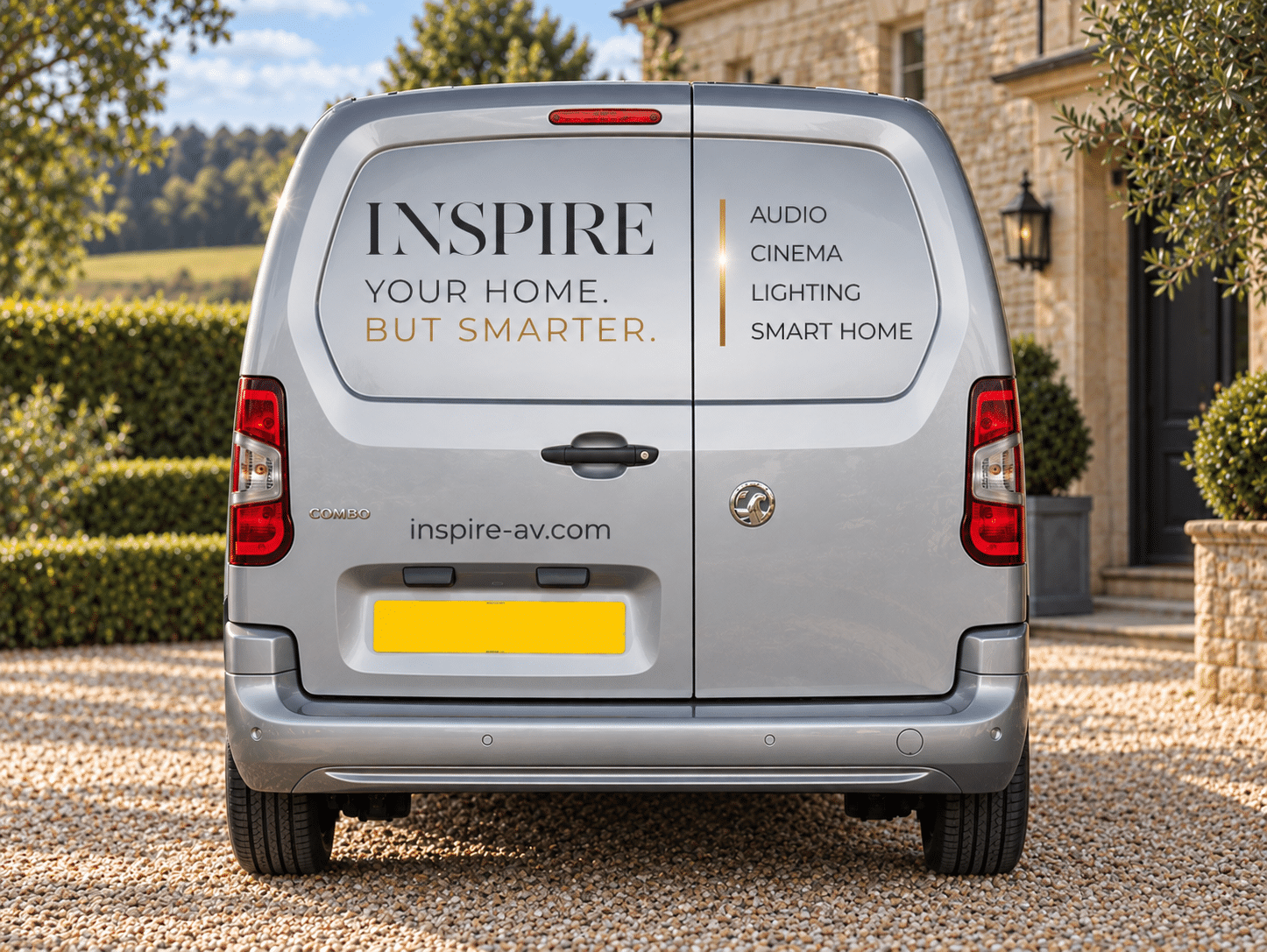
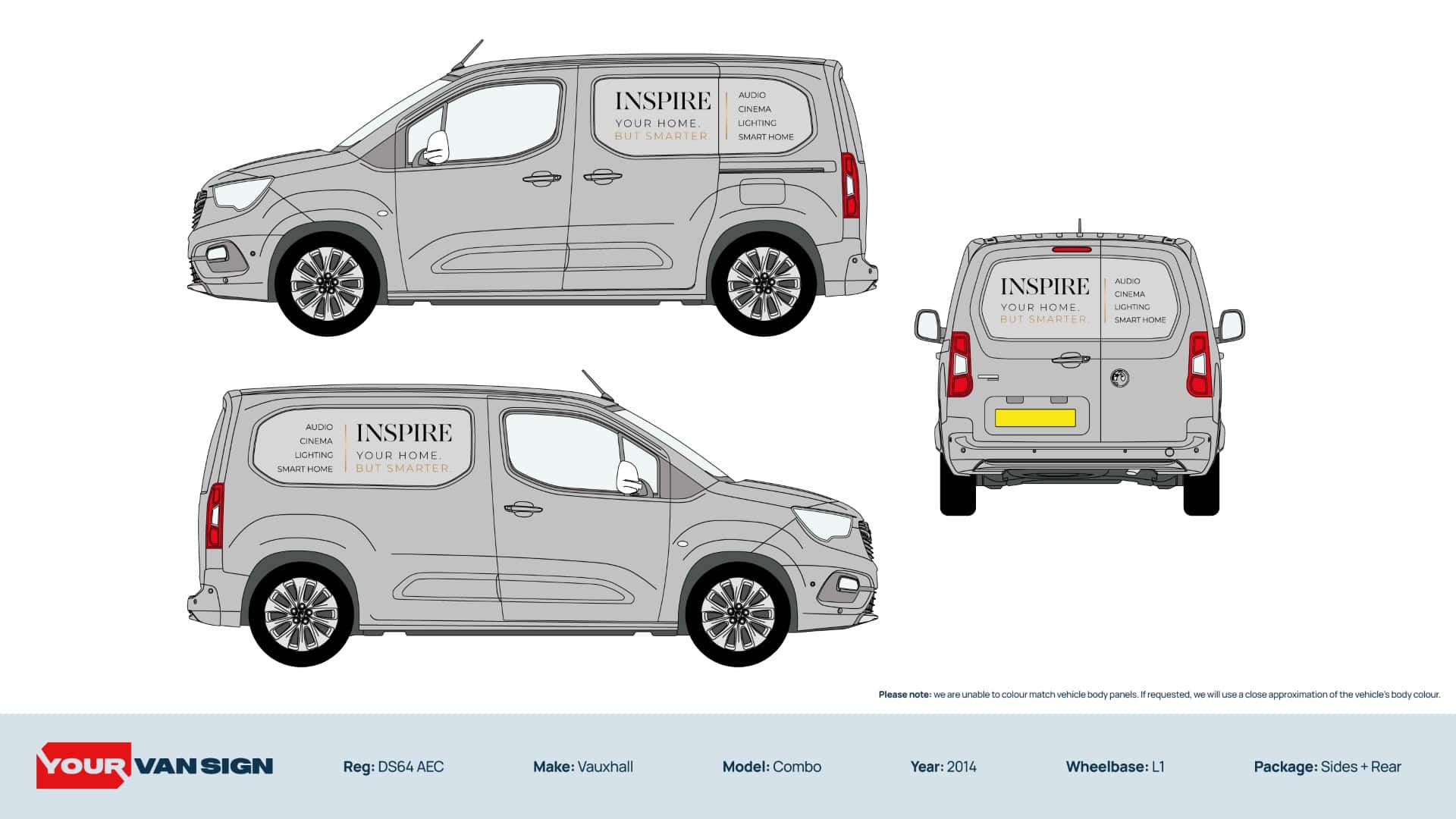
So rather than permanently wrapping the vans, we’ve had removable magnetic Inspire AV signage made.

Simple idea really.

When it’s appropriate, the branding is on.

When a client would prefer additional privacy or discretion, it comes off.

The same principle applies to our social media and project photography. We love showing the work we do, but ultimately the home belongs to the client, not our marketing department.

Smart Home Installation in Harrogate

Inspire AV has been designing and installing residential technology since 2009, working on everything from individual rooms through to complete smart home systems.

For homeowners, architects, interior designers and developers in Harrogate and the surrounding area, our work can include:

  • Control4 smart home automation

  • Intelligent lighting and lighting control

  • Home cinema and media rooms

  • Multi-room audio and television

  • High-performance home Wi-Fi and networking

  • CCTV, intercom and security integration

  • Automated blinds and curtains

  • Heating and climate control

  • Outdoor audio and entertainment

Our approach is to make technology feel like part of the home rather than something that has simply been added to it.

Good smart home design should make a house easier to live in, not more complicated.

So if you see one of the new Inspire AV vans around Harrogate, give us a wave.

And if you don’t see the branding one day, there might be a reason for that too.

Planning a smart home project in Harrogate or North Yorkshire?

Find out more about our smart home installation services in Harrogate or speak to the Inspire AV team about your project.

AI & Smart Lighting Control: Lutron, Control4 & Crestron

The Future of Smart Lighting Control: How AI Could Change Lutron, Control4 and Crestron Homes

Smart lighting control has transformed how we experience our homes. But could artificial intelligence take things a step further, making our lighting more intuitive, more efficient and more personal?

For nearly two decades, we've been designing and installing smart home systems at Inspire Audio Visual. During that time, lighting control has evolved considerably. We've moved from banks of conventional switches to beautifully designed keypads, automated scenes and systems capable of integrating lighting with blinds, heating, security and entertainment.

Yet fundamentally, most lighting systems still rely on one thing: somebody telling them what to do.

You press a button, select a scene or rely on a pre-programmed schedule. The system responds exactly as it has been instructed.

Artificial intelligence could change that relationship.

Instead of simply responding to commands, the next generation of smart lighting control might begin to understand how we live, predict what we need and adapt our surroundings without constant intervention.

But is that genuinely useful innovation, or are we in danger of making something simple unnecessarily complicated?

Smart Lighting Control Today: Already Pretty Clever

Modern lighting control systems from manufacturers such as Lutron, Control4 and Crestron are already remarkably capable.

We can programme a single keypad button to transform an entire living space. Lighting levels adjust, curtains close, music starts playing and a room changes from a practical family environment into somewhere designed for entertaining.

Astronomical time clocks can adjust exterior lighting around sunset and sunrise. Presence sensors can automate corridors and bathrooms. Scheduled scenes can gradually change lighting throughout the day.

In projects such as our York Penthouse Smart Lighting installation, the objective is to bring sophisticated technology into a carefully considered interior without making it complicated to use.

For homeowners, that simplicity matters far more than the technical complexity behind the scenes.

But even the best programmed lighting system has limitations.

A lighting designer or programmer makes decisions about how the home should behave based on what they know at the time of installation. As the homeowner's routines change, those decisions might need adjusting.

This is where AI becomes interesting.

What Could AI Actually Bring to Smart Lighting?

Imagine a home that understands the difference between somebody getting up early for work, a relaxed Sunday morning and an evening entertaining friends.

Rather than relying entirely on fixed schedules, an intelligent lighting system could learn patterns of behaviour and suggest or automatically make appropriate adjustments.

It might notice that the kitchen is normally occupied earlier during the week, that the family prefers warmer lighting in the evenings or that particular rooms are rarely used at certain times.

Combined with occupancy information, daylight levels and other sensors, AI could help the lighting respond more naturally to the way the property is actually being used.

Of course, much of this can already be achieved using conventional programming. The difference would be the system's ability to adapt rather than requiring an engineer to modify every rule.

The technology would also need sensible boundaries. A homeowner should always be able to override the automation, and the system must remain predictable.

Nobody wants their kitchen lights making unexpected decisions because an algorithm thinks it knows better.

The Real Opportunity: Better Lighting Design

For me, one of the most interesting applications of AI isn't necessarily how a finished smart home operates.

It's how we design it in the first place.

A properly considered lighting design involves far more than deciding where to put downlights.

We need to understand the architecture, natural daylight, furniture layouts, decorative fittings, colour temperatures, circuit arrangements and the way different spaces will be used.

Then there are the technical drawings, load schedules, dimming requirements, keypad locations, scene programming and coordination with electricians, architects and interior designers.

On a typical substantial residential project, we might spend around 60 hours on the design and associated planning work.

Could AI reduce that by 50%?

I think there's a realistic opportunity for it to do so in parts of the process.

AI-assisted software could potentially analyse architectural drawings, help identify circuit arrangements, produce draft schedules and accelerate repetitive documentation.

That could give designers more time to concentrate on the areas where their experience genuinely adds value.

But there's an important distinction between producing a lighting plan and designing beautiful lighting.

AI might identify where a fitting could go. It doesn't necessarily understand why a particular architectural feature deserves emphasis, how light will interact with a textured wall or the emotional effect of a carefully balanced scene.

Those decisions still benefit enormously from human experience.

Will AI Replace Lighting Designers and Programmers?

I don't believe so, although I do think the roles will change.

Much of what makes a successful lighting installation comes from understanding the homeowner rather than simply understanding the equipment.

A family with young children will use its home differently from a couple who regularly entertain. Somebody who works unusual hours might need very different lighting behaviour from someone following a conventional routine.

A well-designed system accounts for those differences.

Our job isn't to install as much technology as possible. It's to understand the people who will live with it and then use the technology appropriately.

AI could become an extremely powerful design assistant. It might make documentation faster, identify potential issues earlier and help us explore different approaches before installation begins.

But it shouldn't replace the conversations, judgement and experience that make a home feel right.

In many respects, I'd welcome technology that takes repetitive engineering administration away from our designers.

The more time we can spend thinking about the finished experience, the better.

What Does This Mean for Lutron, Control4 and Crestron?

Manufacturers such as Lutron, Control4 and Crestron have spent years developing reliable, sophisticated control platforms.

The interesting question is how AI might complement these systems.

I don't necessarily see the future as replacing established lighting control infrastructure with an entirely new generation of AI-powered devices.

A properly engineered lighting system still needs dependable dimming, suitable wiring, reliable communication and physical controls that work every time.

Instead, I suspect much of the intelligence could eventually sit above the existing infrastructure.

AI could potentially analyse how lighting scenes are used, recommend improvements, adapt schedules and help commissioning engineers refine system behaviour.

It might even allow homeowners to describe a desired atmosphere in natural language and have the system suggest an appropriate lighting scene.

That said, these are possibilities rather than features we can assume are currently available across the manufacturers' residential systems.

And reliability must remain the priority.

If your internet connection fails, you should still be able to turn your lights on.

The Homeowner Shouldn't Have to Think About the Technology

One concern I have with the smart home industry is our tendency to become fascinated by what technology can do rather than asking whether the homeowner needs it.

We've seen this with touchscreens, complicated interfaces and systems that offer hundreds of functions when most people only use a handful.

AI could easily become another example.

A homeowner doesn't necessarily want a conversation with their house every time they enter the kitchen.

They want the lighting to feel right.

Sometimes the most intelligent solution is still a beautifully designed keypad with three or four clearly labelled buttons.

The challenge for manufacturers and installers will be introducing greater intelligence without compromising the simplicity that makes a system enjoyable to live with.

In my view, the best smart home technology is the technology you barely notice.

Could AI Make Smart Lighting More Affordable?

If AI reduces the time required for some design, documentation and programming tasks, there could eventually be a financial benefit for homeowners.

On larger projects, engineering and design time represents a meaningful proportion of the overall cost.

Reducing repetitive work could improve efficiency and allow installers to spend more time refining the finished installation.

But that doesn't mean lighting design should become a fully automated, low-cost commodity.

A poorly designed lighting scheme doesn't become good simply because it was produced quickly.

The value comes from combining better tools with the experience to use them correctly.

For a professionally designed home, I'd rather see AI help us deliver a better outcome than simply make everything cheaper.

Our View: The Future Is Intelligent, but It Still Needs to Be Human

AI will almost certainly influence the way we design, programme and operate smart homes over the coming years.

Some of its most useful applications might be relatively unexciting from a consumer perspective: faster drawings, improved engineering coordination, more efficient commissioning and better analysis of how homes are actually used.

But those improvements could have a significant impact on the finished experience.

For homeowners, the objective should remain exactly the same as it is today.

Beautiful lighting, simple controls and a home that responds naturally to the people living in it.

At Inspire Audio Visual, we'll continue exploring new technologies as they emerge, but our approach won't change.

We start with the homeowner, the architecture and the way a space should feel.

Then we choose the technology that delivers it.

AI might change some of the tools we use along the way.

It shouldn't change that principle.

Planning a Smart Lighting Project?

Whether you're building a new home, renovating an existing property or considering an upgrade to an established lighting system, getting the design right from the beginning makes a significant difference.

At Inspire Audio Visual, we design and install intelligent lighting systems using Lutron, Control4 and Crestron, working alongside homeowners, architects and interior designers throughout Yorkshire, Cheshire and London.

Explore our lighting design and control services or contact our team to discuss your project.

Call Us

0330 4303490 or 0203 1515075

Email Us

inspireme@inspire-av.com

York to Brighton 500km Charity Cycle and Run | Inspire AV

York to Brighton: 500km, Two Charities and One Very Long Journey

Five hundred kilometres.

It's one of those distances that doesn't sound quite so bad until you start thinking about how far it actually is.

From York to Brighton, crossing England by bicycle and on foot, with the aim of raising money for two charities doing some incredible work.

That was the challenge I set myself in 2025.

Looking back, it was also the beginning of something that would eventually become much bigger than one fundraising event.

But the idea started with a friend, a rowing machine and a cause that meant a great deal to me.

From 41 miles on a rowing machine to 500km across England

Earlier in 2025, my good friend Mark Karvounis took on a 41-mile rowing challenge to raise money for the Charlie Dallas Lancaster Foundation.

Mark had personally benefited from the charity's support, and watching him put everything into that event was pretty inspiring.

A group of friends came together to support him, and our business, Inspire Audio Visual, helped with some of the equipment required on the day.

The event raised £7,296 for CDLF.

But something else happened too.

It got me thinking about what I could do to contribute.

I've always had an interest in physical challenges and pushing myself, but this time there was a bigger reason behind it.

I wanted to use that effort to help people who might be facing a challenge that was far less visible than anything I was about to put myself through.

That's where York to Brighton came from.

Two charities worth making the journey for

The challenge was raising awareness and funds for two organisations: the Charlie Dallas Lancaster Foundation and Together for Cinema.

CDLF is a Yorkshire charity that exists in memory of Charlie Dallas Lancaster, working to raise awareness of mental health and support people and organisations making a difference.

It's a cause with a personal connection for me.

When I was younger, I struggled with my own mental health and was fortunate enough to receive professional therapy.

That experience changed the way I understood myself and helped shape the person I've become.

I know how valuable the right support at the right time can be. And I believe people should have the opportunity to access that help without facing unnecessary barriers.

The second charity, Together for Cinema, is particularly close to our professional world.

Working alongside the audiovisual industry, it designs and installs cinema rooms in children's hospices and other appropriate care settings around the UK.

At Inspire, we spend much of our working life creating home cinemas for private clients. They're wonderful spaces, but seeing similar technology used to give children, families and carers a little escape from incredibly difficult circumstances puts what we do into perspective.

Two very different charities, both making a difference to people's lives.

And both seemed worth travelling a rather long way for.

The challenge: York to Brighton

The plan was to cover approximately 500km from York to Brighton, using a combination of cycling and running.

The cycling portion would take us a considerable distance south, before the running section brought the challenge towards its finish.

I was fortunate to have Mat Cole alongside me throughout the cycling section, with other members of the team joining for the running.

Having people willing to commit their time, energy and support was a huge part of making the challenge possible.

Although the physical effort was my responsibility, an event like this is never really a solo achievement.

Somebody has to help with the route, the equipment, the organisation and all the little things that become rather important when you're spending that much time travelling under your own steam.

There's also something quite different about covering a long distance without simply getting into a car.

Five hundred kilometres becomes a succession of smaller targets.

The next stop. The next section of road. The next change of discipline. And eventually the final destination.

It changes the way you think about distance.

More importantly, it gives you plenty of time to think about why you're doing it.

Why we wanted to do something difficult

There's an obvious connection between physical challenges and mental health fundraising, but I think it's important not to confuse one with the other.

Getting out and exercising can be hugely beneficial for wellbeing. Spending time with good people, getting some fresh air and working towards a goal have all played a positive role in my own life.

But physical fitness isn't a substitute for professional mental health support.

That's precisely why CDLF matters.

We can encourage people to get out, talk, challenge themselves and build stronger friendships, while also recognising that sometimes somebody needs a trained professional to help them through whatever they're experiencing.

For me, the fundraising was about keeping that message visible.

You don't necessarily know what somebody else is going through.

And you never know when the right conversation, introduction or support might make a lasting difference.

Reaching Brighton and looking beyond the finish

Completing the journey to Brighton marked the end of the physical challenge, but it didn't feel like the end of the idea.

We'd brought people together, supported two worthwhile charities and shown what could happen when a group of friends committed themselves to something bigger than their usual routines.

The challenge also reinforced something I'd begun to appreciate through Mark's rowing event.

You don't need to be a large organisation to make a contribution.

A group of friends, a few supportive businesses and people willing to give their time can achieve a great deal.

That thinking eventually developed into The Hard Mile, a collective built around physical challenges, community and raising money for others.

In July 2026, we took things a step further with a non-stop 500km running relay from Scotland to Thirsk, involving six friends and raising more than £34,000 for CDLF.

You can read about that challenge here.

What started with Mark rowing 41 miles had become something with a life of its own.

The reason behind the miles

When people hear about a 500km cycle and run, it's natural to focus on the distance.

But the part I hope people remember is why we did it.

Both CDLF and Together for Cinema exist to make difficult situations a little easier for others.

The physical challenge gave us a way to attract attention, bring supporters together and direct that attention towards something genuinely worthwhile.

And if our efforts encouraged even a few more people to learn about those organisations, support their work or reach out for help, then the journey had a purpose beyond simply getting to Brighton.

You can learn more about CDLF, Together for Cinema and The Hard Mile.

We've also shared more about why Inspire Audio Visual continues to support CDLF.

The miles were difficult. The reasons for doing them were straightforward.

Sony Pro 75″ HDR 4K installation

We’ve been a fan of the Sony Pro range of TV’s for a while and we installed a number of the previous generation of their large format LED TV’s so have naturally progressed to providing the new model, the FW-75X8570C. This client wanted a large TV in the snug of his new build house so the new 75″ Sony was the obvious choice … this was works beautifully with the Control4 EA1 and SR260 and because the Sony Pro range can be controlled via IP, there’s no need for an unsightly IR bug stuck to the front of the TV.

img_20160908_171724

Sony-Pro-TV-Installation

We also added a Marantz AVR, Monitor Audio SB-3 soundbar, Monitor Audio Radius Subwoofer, Amazon Fire TV and the clients newly supplied Sky Q Box which all fit nicely into the Norstone Khalms media units. These units are fitted to the wall so are ‘floating effect’ although they do come with optional stands should you want them floor mounted. Its a really nice single room solution … even the dogs made himself at home right next to it!

img_20160908_171708

Sony-pro-tv-isntallation


    Name (required)

    Email (required)

    Phone

    Area of interest

    Home CinemaSmart HomeLighting ControlAudio Visual

    Type of installation

    Price Margin (Leave blank or estimate if unsure)

    If you know the number of rooms within the property, please select from the options below.

    If you have any floor plans of the property you would like to submit, please attach below.

    This site is protected by reCAPTCHA and the Google
    Privacy Policy and Terms of Service apply.