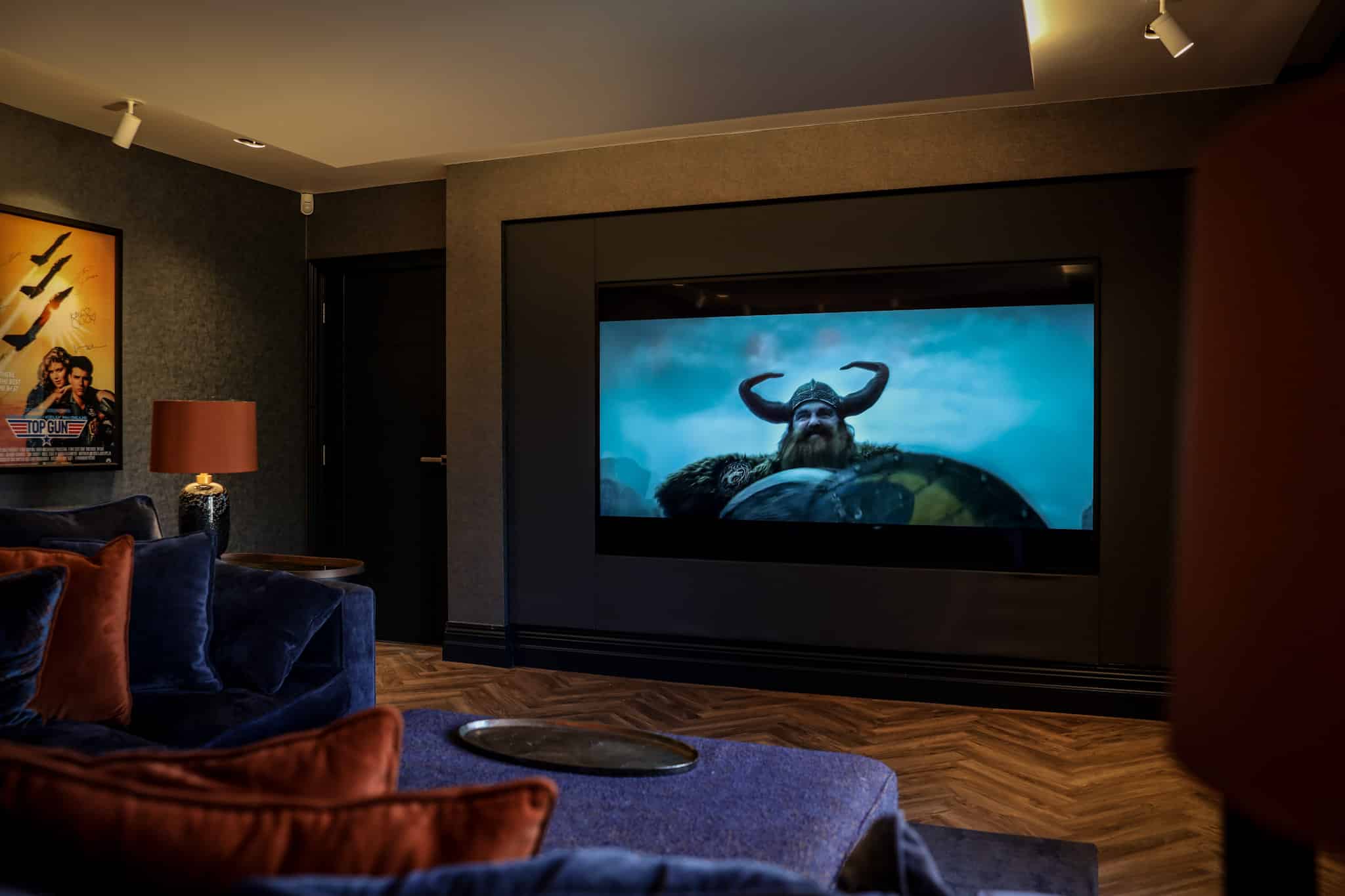
What's the difference between smart products and a professional smart home?
For most homes, consumer smart technology is incredibly capable.
Products such as smart speakers, wireless audio systems, video doorbells and app-controlled lighting can add useful features without requiring a professionally designed home automation system.
If you want to control a few lamps, play music in the kitchen and check who's at the front door from your phone, you probably don't need us.
And we're perfectly happy to admit that.
A professional smart home becomes relevant when multiple systems throughout a property need to work together.
This might include:
-
Smart lighting control
-
Heating and climate control
-
Automated blinds and curtains
-
Multi-room audio
-
Video distribution
-
Home cinema
-
Security and CCTV
-
Door entry and access control
-
Wi-Fi and home networking
At this point, the challenge is no longer making one product work.
It's designing the infrastructure and user experience so the entire home feels simple.
That's the difference between owning smart products and living in a professionally designed smart home.
Who actually benefits from a professional smart home?
In our experience, the clients who get the most value from professional home automation tend to share one thing.
They value their time.
They don't want to spend Saturday afternoon installing Wi-Fi access points or searching online to find out why two smart devices have suddenly stopped communicating.
They want to walk into their home and use it.
These clients may have large properties, busy careers or families. They might regularly entertain or simply place a high value on convenience and the experience of their home.
They often want the technology too.
Whole-home music.
Beautiful architectural lighting.
A dedicated cinema.
Automated blinds.
Security.
The ability to control multiple parts of the property simply.
But the important difference is that they understand a professional smart home is a premium system that requires ongoing care.
How much does a professional smart home cost to maintain?
This is one of the conversations we believe smart home installers should have much earlier with clients.
Let's say you have a budget of £30,000 for smart home technology.
The question isn't simply whether you can afford the initial installation.
Would you also be comfortable investing £1,500 to £3,000 per year in support, maintenance and future improvements if your system required it?
Every project is different and ongoing costs will depend on the size and complexity of the system.
However, professional smart homes contain technology.
And technology changes.
Software is updated. Hardware ages. Internet services change. Manufacturers develop new products and, perhaps most importantly, the way your family uses the house evolves.
We think of it a little like owning a high-performance car.
You wouldn't buy a supercar and expect the servicing, tyres and maintenance to cost the same as a small family hatchback.
A professionally integrated smart home should be viewed with the same honesty.
The more complex the system, the more important professional support becomes.
Why one-size-fits-all smart homes don't work
There is no perfect smart home specification.
There's only the right smart home for the person or family living in it.
Think about buying a car.
One person wants performance.
Another wants luxury.
A family needs space.
Someone travelling hundreds of miles each week might prioritise comfort and efficiency.
Nobody walks into a car dealership and says, "Just give me the standard car for humans."
Yet smart homes are regularly designed this way.
A standard specification is created.
A processor is selected.
A few touchscreens are added.
Lighting, audio and heating are integrated.
Job done.
Except nobody has really asked how the client lives.
A single person living alone will use their home completely differently to a family with three children.
Their routines are different.
Their priorities are different.
Their tolerance for technology might be completely different.
A genuine smart home should reflect this.
We can normally spot a badly designed smart home in 60 seconds
When we visit an existing smart home, we don't always need to inspect the equipment rack or start testing the network to understand whether the system has been designed well.
Sometimes, we simply watch the homeowner use it.
How do they turn the lights on?
How do they play music?
Can every member of the family watch television?
Where do they hesitate?
What do they avoid using?
Listen carefully and you'll often hear a sentence we've heard hundreds of times:
"It's always been a bit annoying."
That's the giveaway.
The technology might technically work, but it hasn't been designed around the person using it.
We call this a beige smart home.
It has all the equipment.
It probably looked impressive on the original quotation.
But it has no personality.
Worse, it can create more frustration than enjoyment.
For us, good smart home design starts with the homeowner, not the equipment.
How should a professional smart home be designed?
One of the questions we ask clients is to imagine their finished home.
The builders have left.
The interior is complete.
Imagine arriving home at sunset. The exterior lighting has automatically come on and the property looks exactly as you imagined it would.
You walk through the front door.
From a technology point of view, what excites you most?
The answer tells us a lot.
The visually driven homeowner
Some clients immediately talk about lighting.
They care deeply about how the property looks and feels.
For these projects, professional lighting design and smart lighting control may become a significant part of the technology budget.
It's not about turning lights on from an app.
It's about creating layers, scenes and atmosphere throughout the property.
The entertainer
Other clients immediately talk about music.
They imagine friends in the kitchen, doors open to the garden and music playing throughout the entertaining spaces.
Multi-room audio becomes important.
But this doesn't automatically mean specifying the most complex audio distribution system available.
For some clients, a familiar platform such as Sonos may provide a better experience.
The right solution is the one the homeowner will enjoy using.
The family
Then there are clients who immediately imagine the family together in a cinema or media room.
For these homes, simplicity becomes critical.
If only one technically minded person can operate the system, we've failed.
The children should be able to use it.
Partners should be able to use it.
Guests shouldn't require a 45-minute induction to watch television.
Understanding what excites a client helps us decide where technology will create the most value.
Should I put smart technology everywhere?
We regularly meet clients who tell us they want everything.
We like those conversations.
But "everything" can become expensive very quickly. Technology packages for the world's most advanced homes can run north of £1 million.
For most projects, establishing a realistic budget helps focus the design.
We would rather see a client invest properly in the areas of their home they genuinely value than spread the budget too thinly across dozens of features.
If you love entertaining, invest in the audio and outdoor spaces.
If the visual experience of the property matters to you, prioritise lighting design and control.
If weekends revolve around films and family time, build the cinema or media room properly.
Spend the money where you'll actually feel it.
That doesn't mean ignoring future technology.
A major part of professional smart home design is planning the infrastructure of the property.
During a new build or renovation, installing the correct cabling can provide options for technologies the homeowner may want in five or ten years.
You don't necessarily need to buy everything today.
But you should think about tomorrow before the plasterboard goes on.
Does the smart home platform matter?
Yes.
But perhaps not as much as you think.
Control4, Crestron and KNX are all capable professional smart home technologies.
The bigger question is whether the platform and products being recommended are right for you.
Homeowners should be cautious if every conversation with an installer appears to lead to the same manufacturer.
Parts of the professional smart home industry are structured around dealer relationships.
Installers may receive improved commercial terms based on the amount of equipment they purchase from a manufacturer.
There is nothing unusual or inherently wrong with this.
The problem begins when commercial targets start influencing the design of your home.
Imagine you ask us for multi-room audio.
We could potentially specify an audio solution from a wider smart home ecosystem.
But if we believe Sonos provides the best experience for your family, we'll recommend Sonos.
Technology should be selected because it solves your requirement.
Not because an installer needs to hit a sales target.
The platform should fit the client.
The client should never have to fit the platform.