Smart Home Installation Harrogate | Inspire AV on the Road

Why You Might Start Seeing More of Inspire AV Around Harrogate

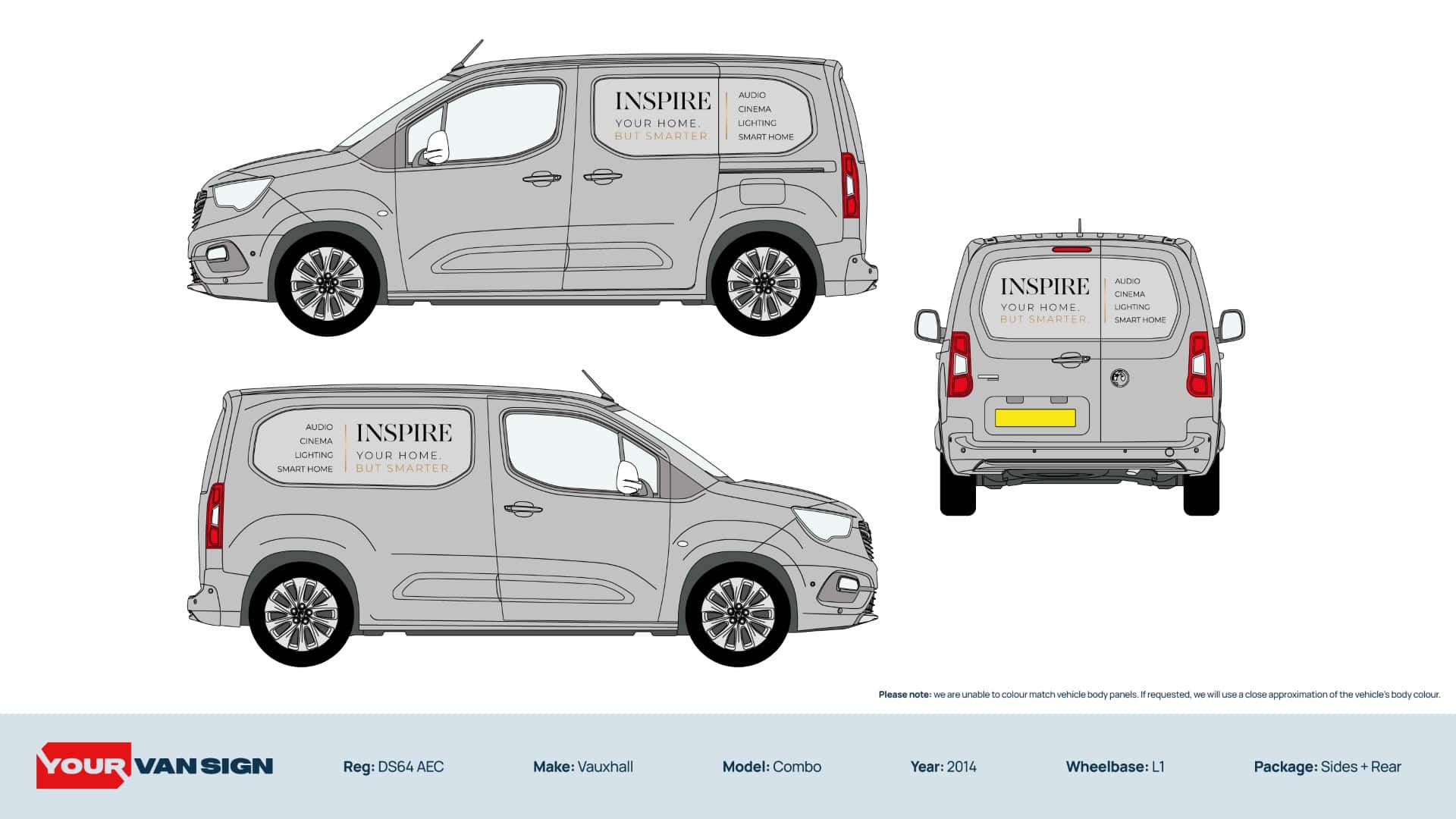
If you’re around Harrogate and North Yorkshire, you may start seeing the Inspire AV name on the road a little more often.

For years, most of our vans have actually been left unbranded — and there was a good reason for it.

In the earlier days of Inspire, our vehicles were fully branded. But as we started working on more high-end homes, including projects for some well-known clients, we were occasionally asked to arrive in unbranded vehicles.

For some clients, it was simply about privacy. For others, there were genuine security considerations, or they just preferred that the work happening inside their home remained exactly that — private.

And because Inspire has always been a client-first business, we listened.

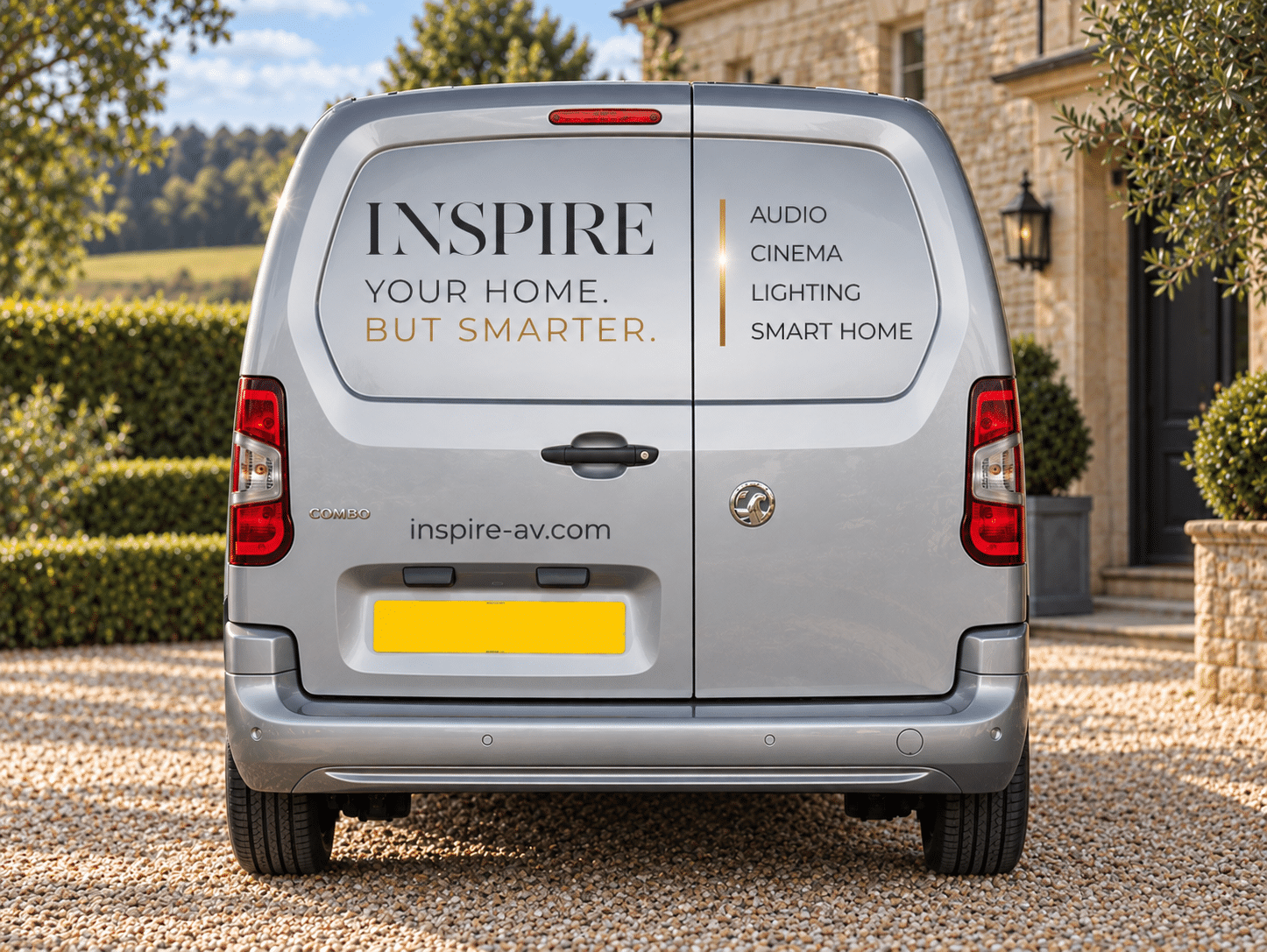
Bringing the Inspire AV Brand Back to the Road

Fast-forward to today and, being completely honest, we want more people to know who Inspire AV is.

We’re designing and installing smart homes, home cinemas, lighting systems, networking and integrated technology across Harrogate, Yorkshire, Cheshire and London, and it makes sense for our brand to be visible while we’re out doing it.

But we didn’t want that to come at the expense of something our clients value.

So rather than permanently wrapping the vans, we’ve had removable magnetic Inspire AV signage made.

Simple idea really.

When it’s appropriate, the branding is on.

When a client would prefer additional privacy or discretion, it comes off.

The same principle applies to our social media and project photography. We love showing the work we do, but ultimately the home belongs to the client, not our marketing department.

Smart Home Installation in Harrogate

Inspire AV has been designing and installing residential technology since 2009, working on everything from individual rooms through to complete smart home systems.

For homeowners, architects, interior designers and developers in Harrogate and the surrounding area, our work can include:

  • Control4 smart home automation

  • Intelligent lighting and lighting control

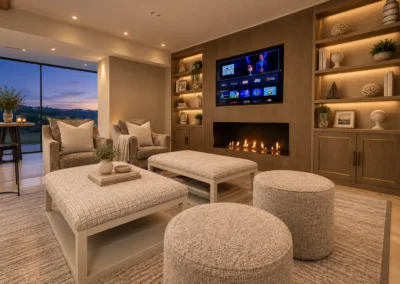
  • Home cinema and media rooms

  • Multi-room audio and television

  • High-performance home Wi-Fi and networking

  • CCTV, intercom and security integration

  • Automated blinds and curtains

  • Heating and climate control

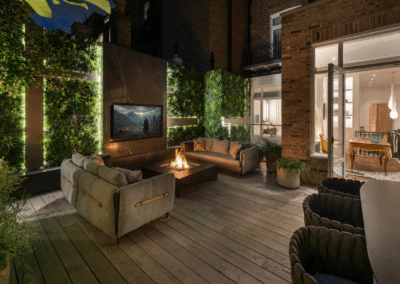
  • Outdoor audio and entertainment

Our approach is to make technology feel like part of the home rather than something that has simply been added to it.

Good smart home design should make a house easier to live in, not more complicated.

So if you see one of the new Inspire AV vans around Harrogate, give us a wave.

And if you don’t see the branding one day, there might be a reason for that too.

Planning a smart home project in Harrogate or North Yorkshire?

Find out more about our smart home installation services in Harrogate or speak to the Inspire AV team about your project.

AI & Smart Lighting Control: Lutron, Control4 & Crestron

The Future of Smart Lighting Control: How AI Could Change Lutron, Control4 and Crestron Homes

Smart lighting control has transformed how we experience our homes. But could artificial intelligence take things a step further, making our lighting more intuitive, more efficient and more personal?

For nearly two decades, we've been designing and installing smart home systems at Inspire Audio Visual. During that time, lighting control has evolved considerably. We've moved from banks of conventional switches to beautifully designed keypads, automated scenes and systems capable of integrating lighting with blinds, heating, security and entertainment.

Yet fundamentally, most lighting systems still rely on one thing: somebody telling them what to do.

You press a button, select a scene or rely on a pre-programmed schedule. The system responds exactly as it has been instructed.

Artificial intelligence could change that relationship.

Instead of simply responding to commands, the next generation of smart lighting control might begin to understand how we live, predict what we need and adapt our surroundings without constant intervention.

But is that genuinely useful innovation, or are we in danger of making something simple unnecessarily complicated?

Smart Lighting Control Today: Already Pretty Clever

Modern lighting control systems from manufacturers such as Lutron, Control4 and Crestron are already remarkably capable.

We can programme a single keypad button to transform an entire living space. Lighting levels adjust, curtains close, music starts playing and a room changes from a practical family environment into somewhere designed for entertaining.

Astronomical time clocks can adjust exterior lighting around sunset and sunrise. Presence sensors can automate corridors and bathrooms. Scheduled scenes can gradually change lighting throughout the day.

In projects such as our York Penthouse Smart Lighting installation, the objective is to bring sophisticated technology into a carefully considered interior without making it complicated to use.

For homeowners, that simplicity matters far more than the technical complexity behind the scenes.

But even the best programmed lighting system has limitations.

A lighting designer or programmer makes decisions about how the home should behave based on what they know at the time of installation. As the homeowner's routines change, those decisions might need adjusting.

This is where AI becomes interesting.

What Could AI Actually Bring to Smart Lighting?

Imagine a home that understands the difference between somebody getting up early for work, a relaxed Sunday morning and an evening entertaining friends.

Rather than relying entirely on fixed schedules, an intelligent lighting system could learn patterns of behaviour and suggest or automatically make appropriate adjustments.

It might notice that the kitchen is normally occupied earlier during the week, that the family prefers warmer lighting in the evenings or that particular rooms are rarely used at certain times.

Combined with occupancy information, daylight levels and other sensors, AI could help the lighting respond more naturally to the way the property is actually being used.

Of course, much of this can already be achieved using conventional programming. The difference would be the system's ability to adapt rather than requiring an engineer to modify every rule.

The technology would also need sensible boundaries. A homeowner should always be able to override the automation, and the system must remain predictable.

Nobody wants their kitchen lights making unexpected decisions because an algorithm thinks it knows better.

The Real Opportunity: Better Lighting Design

For me, one of the most interesting applications of AI isn't necessarily how a finished smart home operates.

It's how we design it in the first place.

A properly considered lighting design involves far more than deciding where to put downlights.

We need to understand the architecture, natural daylight, furniture layouts, decorative fittings, colour temperatures, circuit arrangements and the way different spaces will be used.

Then there are the technical drawings, load schedules, dimming requirements, keypad locations, scene programming and coordination with electricians, architects and interior designers.

On a typical substantial residential project, we might spend around 60 hours on the design and associated planning work.

Could AI reduce that by 50%?

I think there's a realistic opportunity for it to do so in parts of the process.

AI-assisted software could potentially analyse architectural drawings, help identify circuit arrangements, produce draft schedules and accelerate repetitive documentation.

That could give designers more time to concentrate on the areas where their experience genuinely adds value.

But there's an important distinction between producing a lighting plan and designing beautiful lighting.

AI might identify where a fitting could go. It doesn't necessarily understand why a particular architectural feature deserves emphasis, how light will interact with a textured wall or the emotional effect of a carefully balanced scene.

Those decisions still benefit enormously from human experience.

Will AI Replace Lighting Designers and Programmers?

I don't believe so, although I do think the roles will change.

Much of what makes a successful lighting installation comes from understanding the homeowner rather than simply understanding the equipment.

A family with young children will use its home differently from a couple who regularly entertain. Somebody who works unusual hours might need very different lighting behaviour from someone following a conventional routine.

A well-designed system accounts for those differences.

Our job isn't to install as much technology as possible. It's to understand the people who will live with it and then use the technology appropriately.

AI could become an extremely powerful design assistant. It might make documentation faster, identify potential issues earlier and help us explore different approaches before installation begins.

But it shouldn't replace the conversations, judgement and experience that make a home feel right.

In many respects, I'd welcome technology that takes repetitive engineering administration away from our designers.

The more time we can spend thinking about the finished experience, the better.

What Does This Mean for Lutron, Control4 and Crestron?

Manufacturers such as Lutron, Control4 and Crestron have spent years developing reliable, sophisticated control platforms.

The interesting question is how AI might complement these systems.

I don't necessarily see the future as replacing established lighting control infrastructure with an entirely new generation of AI-powered devices.

A properly engineered lighting system still needs dependable dimming, suitable wiring, reliable communication and physical controls that work every time.

Instead, I suspect much of the intelligence could eventually sit above the existing infrastructure.

AI could potentially analyse how lighting scenes are used, recommend improvements, adapt schedules and help commissioning engineers refine system behaviour.

It might even allow homeowners to describe a desired atmosphere in natural language and have the system suggest an appropriate lighting scene.

That said, these are possibilities rather than features we can assume are currently available across the manufacturers' residential systems.

And reliability must remain the priority.

If your internet connection fails, you should still be able to turn your lights on.

The Homeowner Shouldn't Have to Think About the Technology

One concern I have with the smart home industry is our tendency to become fascinated by what technology can do rather than asking whether the homeowner needs it.

We've seen this with touchscreens, complicated interfaces and systems that offer hundreds of functions when most people only use a handful.

AI could easily become another example.

A homeowner doesn't necessarily want a conversation with their house every time they enter the kitchen.

They want the lighting to feel right.

Sometimes the most intelligent solution is still a beautifully designed keypad with three or four clearly labelled buttons.

The challenge for manufacturers and installers will be introducing greater intelligence without compromising the simplicity that makes a system enjoyable to live with.

In my view, the best smart home technology is the technology you barely notice.

Could AI Make Smart Lighting More Affordable?

If AI reduces the time required for some design, documentation and programming tasks, there could eventually be a financial benefit for homeowners.

On larger projects, engineering and design time represents a meaningful proportion of the overall cost.

Reducing repetitive work could improve efficiency and allow installers to spend more time refining the finished installation.

But that doesn't mean lighting design should become a fully automated, low-cost commodity.

A poorly designed lighting scheme doesn't become good simply because it was produced quickly.

The value comes from combining better tools with the experience to use them correctly.

For a professionally designed home, I'd rather see AI help us deliver a better outcome than simply make everything cheaper.

Our View: The Future Is Intelligent, but It Still Needs to Be Human

AI will almost certainly influence the way we design, programme and operate smart homes over the coming years.

Some of its most useful applications might be relatively unexciting from a consumer perspective: faster drawings, improved engineering coordination, more efficient commissioning and better analysis of how homes are actually used.

But those improvements could have a significant impact on the finished experience.

For homeowners, the objective should remain exactly the same as it is today.

Beautiful lighting, simple controls and a home that responds naturally to the people living in it.

At Inspire Audio Visual, we'll continue exploring new technologies as they emerge, but our approach won't change.

We start with the homeowner, the architecture and the way a space should feel.

Then we choose the technology that delivers it.

AI might change some of the tools we use along the way.

It shouldn't change that principle.

Planning a Smart Lighting Project?

Whether you're building a new home, renovating an existing property or considering an upgrade to an established lighting system, getting the design right from the beginning makes a significant difference.

At Inspire Audio Visual, we design and install intelligent lighting systems using Lutron, Control4 and Crestron, working alongside homeowners, architects and interior designers throughout Yorkshire, Cheshire and London.

Explore our lighting design and control services or contact our team to discuss your project.

Call Us

0330 4303490 or 0203 1515075

Email Us

inspireme@inspire-av.com

smart home cost uk calculator

How Much Does a Smart Home Cost in the UK in 2026?

How long is a piece of string?

That's normally my slightly unhelpful first answer when somebody asks me how much a smart home costs.

The reason is simple. No two smart homes are really the same.

One client might absolutely love music and want great audio throughout the house. Another might care far more about incredible lighting. Someone else wants everything brought together: lighting, heating, blinds, TVs, music, security, gates and cameras, all working as one home.

So rather than giving you a fairly meaningless figure of £30,000, £50,000 or £150,000, we've approached this differently.

We've built a Smart Home Cost Calculator that lets you work through the property and build an indicative technology budget based on what you actually want.

If you have architectural or electrical drawings, get them out before you start.

When the calculator asks how many rooms you'd like music in, work through the plans and count them. Do the same with TVs, motorised blinds, cameras and the other systems you're considering.

You don't need to know exactly what equipment you want.

That's our job.

You just need to think about how you'd actually like to live in the house.

Try our Smart Home Cost Calculator


Home Technology Budgeting Tool | Inspire AV

Home Technology
Budgeting Tool

powered byInspire Audio Visual

This tool will help you understand the likely scale of your project and set a realistic early-stage budget. If you have architectural or electrical plans, it helps to have them next to you — as you go, count the rooms and systems you're considering. For example, when we ask how many rooms you'd like music in, work through the plans, count the zones, and enter the total. You don't need a finished specification — just a rough idea is enough.

The calculator looks at your project in layers: cabling and infrastructure, network, lighting and shading, audio and video, home cinema, security, access control, and smart home integration.

This is a guide figure, not a quote — every project at Inspire AV is individually designed following a survey. Prefer to talk it through instead? Book a consultation.

What's your home's floor area?

A round number is fine.

Let's talk about wiring. What best describes your situation?

A reliable smart home starts with the right cabling and infrastructure. If you're building or renovating, this is one of the most important areas to get right before walls and ceilings close up.

How extensive / future-ready would you like your home's wiring to be?

Prewire pricing varies with exactly what you'd like in your home. Wiring budget is for low-voltage wiring only, not electrical.

Would you like a fibre backbone for enhanced bandwidth distribution?

A separate allowance for projects wanting Gigabit+ distribution between key points in the home, over and above the standard prewire.

How about the network?

This covers a properly designed network — router/firewall, managed switching, Wi-Fi access points, installation and commissioning. A smart home is only as reliable as the network it runs on.

Do you want a whole-home lighting control system?

This is the control system itself — keypads, dimming and scene control. Professional platforms may include systems such as Lutron, Control4 or Crestron depending on the scale and requirements of the property.

Do you want any motorised shading?

If none, leave at 0. The range accounts for roller blinds, curtain tracks, window size, fabric, dual shades and architectural finishes.

How many rooms would you like music in?

Work through your plans and count the zones, including exterior areas. If none, enter 0.

How many TVs would you like, in each size category?

Don't include cinema or dedicated surround-sound room TVs — we'll ask about those next. Each TV budget covers a control/connectivity allowance plus the television itself.

Do you want to centralise your video sources and view them on any TV?

Called "video distribution" — it reduces the amount of equipment sitting at each TV location.

Would you like heating integrated into your control system?

This is an allowance for integration and control, not for supplying the heating system itself.

Would you like air-conditioning integrated into your control system?

Again, this is an allowance for integration and control rather than supplying the air-conditioning equipment.

Do you have a dedicated home cinema room? Please select a budget.

Pricing does not include seating or room construction unless specifically stated. If wiring is being newly installed, we'll add a cinema prewire allowance automatically.

Would you like a media room — a separate room fitted out with a surround sound system?

Do you want a security and fire detection system?

How many CCTV cameras do you think you need?

Typically front of house, front door, driveway/gate, sides of house and pool. The range depends on camera quality, recording requirements and installation complexity.

Do you need access control or an entry intercom?

Includes gates and advanced entry systems. If none, enter 0.

Do you want to control your house through a single app, or several?

A single app means a genuinely integrated home control / smart home system, rather than lots of individual smart products each with their own app.

Which systems do you want on that single app?

Does this home need very high-end architectural finishes for its technology systems?

Includes items such as premium keypads, flush-mounted touchscreens, concealed or mirror televisions, bespoke housings and motorised concealment.

Total estimated budget range

SystemLowHigh

+ VAT

What should be done now?

If you're building or undertaking a major renovation, the most important elements to protect during construction are the cabling, network infrastructure, lighting-control infrastructure, blind power/cabling and any cinema or future AV provisions.

Televisions, speakers, amplification and some automation features can often be added or upgraded later if the correct infrastructure has been installed first.

You don't necessarily need to buy everything on day one, but you should design for it on day one.

If you already have architectural, lighting or electrical drawings, send them over — an Inspire AV designer can review them alongside your result and advise where the budget is best spent.

Book a consultation →

Prices are ex VAT and indicative only. Every Inspire AV project is individually designed, and final pricing depends on site conditions, product choice and specification. A property survey and/or drawing review is required before quotation — this tool is an early-stage budgeting guide, not a quotation.

The calculator gives you an estimated low-to-high budget rather than pretending it can produce an exact quotation online.

That's deliberate.

A smart home is bespoke, and the final price will always depend on the property, specification, finishes and equipment selected.

But it should give you something incredibly useful at the early design stage:

an idea of where your technology budget actually needs to go.


First things first: you can't build a smart home without the infrastructure

This is probably one of the least exciting things we'll ever sell you.

Cable.

Miles of the stuff.

CAT6, speaker cable, control cable, fibre and all the infrastructure that eventually disappears behind plasterboard, ceilings and joinery.

You don't see it.

You don't particularly appreciate it.

But it's absolutely fundamental.

Think of it like the wiring loom in a supercar.

Nobody walks into a showroom, opens the bonnet and gets excited about the wiring loom. But remove it and that very expensive car isn't going anywhere.

A properly pre-wired smart home can now run into tens of thousands of pounds at first fix, particularly as the cost of copper, fibre and labour has increased.

And this leads to something we've said for years:

The most expensive cable is the one you don't install.

Running a cable while a property is at first fix is relatively straightforward.

Deciding two years later that you'd like an outdoor television, a cinema in the attic, speakers in the garden or better connectivity at the gatehouse is another matter entirely.

Now we're potentially opening finished ceilings, disturbing decoration, working around bespoke joinery or digging up a beautifully landscaped driveway.

That £100 cable suddenly becomes a much more expensive exercise.

We can't anticipate every mad-cap idea somebody might have five years into owning a house.

Nobody can.

What good design can do is make sure we've got enough infrastructure in enough sensible places that, most of the time, we can find a way of doing it without ripping the house apart.

Long driveways, gates and detached gatehouses are a classic example.

Getting infrastructure out there during construction can look like an easy place to save money.

Until you need it later.

Then it has a habit of biting you in the bum.


Next comes the network

If somebody tells us they have a £100,000 technology budget but want to save money on the network, we're going to have a conversation.

Modern homes depend on connectivity.

Streaming TV.

Music.

Phones.

Tablets.

Working from home.

Security cameras.

Door entry.

Lighting systems.

Heating controls.

Smart appliances.

And probably three times as many connected devices once your kids get involved.

A good wired backbone and properly designed Wi-Fi network isn't really the glamorous part of a smart home.

But your family and your working life will thank you for getting it right.

A smart home is only as reliable as the network it runs on.


Is smart home technology a luxury?

Yes.

I don't think there's anything wrong with saying that.

It is a luxury.

But what has changed massively over the last 20 years is accessibility.

When I started in this industry, some of the things we're talking about genuinely were reserved for an incredibly small group of people.

That's no longer the case.

Take lighting as a simple example.

We're not an installer of Philips Hue systems, but Hue can achieve some of the basic things that a far more sophisticated lighting-control system does.

Lights can dim.

Scenes can change.

You can control them from an app.

The difference as you move further up the market is in the experience.

The reliability.

The integration.

The tactile quality of the keypads.

How the lighting has been designed.

How naturally the house responds.

And ultimately how little you have to think about the technology.

That's where professional smart-home design starts becoming something very different from simply owning lots of smart products.


How much should I spend on smart-home wiring?

There is no perfect price-per-square-foot figure, but it is a very useful way of establishing an early budget.

For example, our budgeting tool uses different allowances depending on whether you're looking for fairly basic infrastructure, a properly automated home or a much more comprehensive future-ready technology package.

It's not supposed to replace a detailed design.

It's supposed to condition the budget.

Because discovering during first fix that the technology package is going to cost substantially more than you expected isn't particularly useful to anybody.

Architects, interior designers, contractors and homeowners all need a sensible number to work with early enough in the process.

Once the drawings are developed, we can then move away from square-foot allowances and start designing the house properly, room by room and system by system.


What should I spend money on first?

If your budget is limited, my answer is pretty simple.

Cable it properly.

Then build a great network and Wi-Fi backbone.

After that, ask yourself a much more interesting question:

What actually brings you joy?

It's your house, not mine.

If sitting down on a Friday night with Netflix on a huge television and a great surround-sound system is your thing, spend money there.

If you have music playing from the second you walk through the door until you go to bed, invest in multi-room audio.

If architecture, interiors and lighting are what make you happy, put more of the budget into lighting design and control.

There isn't a correct answer.

A good technology designer shouldn't be trying to sell you every feature available.

They should be working out which parts will genuinely make the house better for you.

At the same time, there are some fantastic tricks that integrated homes can offer that clients simply don't know are possible.

That's where working with an experienced company matters.

Part of our job is listening.

The other part is saying:

"Have you thought about doing this?"


When should a smart-home company get involved?

Ideally?

At design stage.

When the architectural plans exist and there is still time to influence electrical layouts, lighting, joinery, plant rooms, blinds, networking and cable routes.

Unfortunately, that's not always what happens.

Quite often somebody suddenly says:

"Shit. What about the TVs and the lighting?"

And everyone starts running around trying to get a technology design turned around before the electrician closes the walls.

We can do it.

We've done it plenty of times.

But earlier is better.

Smart-home design should be part of the building design, not something bolted onto it at the end.


How can a smart home cost £100,000?

This is probably where people get hung up on the equipment.

But equipment doesn't make a good smart home.

A good designer attached to a great business does.

We've seen technology budgets well beyond £1 million where the client simply wanted the very best throughout the property.

At that level the numbers can become extraordinary.

But exactly the same principle applies whether you're spending £30,000 or £1 million.

The goal isn't to fill the house with equipment.

It's to design the right experience.

We work with a lot of different manufacturers precisely because we don't believe one brand is the correct answer for every property.

The product shouldn't be chosen because it's the easiest thing for the installer to sell or because it provides the best margin.

It should be chosen because it gives the client the right result.

That's also why our calculator isn't branded around one particular smart-home manufacturer.

At the budgeting stage, we're trying to establish what the house needs to do, not decide which logo needs to be on the box.


Smart lighting, audio, TVs, blinds and cinema all change the budget

This is where smart-home pricing quickly becomes impossible to summarise with one number.

A homeowner who wants conventional lighting, three televisions and music in the kitchen has a very different brief from somebody wanting:

  • whole-home lighting control

  • architectural keypads

  • 15 zones of audio

  • motorised curtains throughout

  • a dedicated cinema

  • CCTV

  • gates and intercom

  • heating and air-conditioning integration

  • high-performance Wi-Fi

  • centralised equipment

  • whole-home control

The houses could even be exactly the same size.

The technology budgets wouldn't be remotely similar.

That's why the calculator asks about the individual systems rather than simply asking for the value or size of your home.


Can I install some of the smart home later?

Absolutely.

In fact, this is one of the most important parts of planning a technology budget.

You might not want twelve zones of audio today.

You might not build the cinema for another three years.

Maybe the garden landscaping isn't happening until phase two.

That's fine.

Just design for it now.

Put the infrastructure in.

Allow rack space.

Provide network capacity.

Run the cable.

Think about blind power.

Think about the garden.

Think about the attic.

Think about the gate.

Then spend the rest of the money when it makes sense.

Televisions get better.

Audio equipment changes.

Technology evolves.

The cable buried behind your finished walls is considerably harder to change.


So, how much does a smart home actually cost?

There genuinely isn't one answer.

And I'd be suspicious of anybody trying to give you one without understanding the property.

What we can do is help you establish a sensible budget.

That's what our calculator is designed to do.

Sit down with your plans.

Work through the rooms.

Think about the systems you'd actually use.

Try the options.

You might discover the budget is less than you expected.

It might be considerably more.

Neither result is necessarily bad.

The useful outcome is:

"Now I understand where I need to allocate my budget."

That's the point of the exercise.

And if the number doesn't work, change the specification.

Protect the infrastructure.

Prioritise what matters.

Phase what can wait.

A smart home should be designed around the people living in it, not around a shopping list of technology.


Planning a New Build or Renovation?

If you already have architectural, lighting or electrical drawings, send them over.

We can review them, look at the technology you're considering and help you understand where the budget is best spent before the project gets too far down the road.

Inspire Audio Visual designs and installs smart-home technology, lighting control, home cinema, networking, audio and security systems across Yorkshire, Cheshire, London and throughout the UK.

Use the Smart Home Cost Calculator above to establish your starting budget, then speak to us when you're ready to turn that budget into a design.

Smart Home Support Harrogate | Control4, Crestron & KNX

Sometimes a homeowner chooses to change their smart home dealer.

The relationship may have broken down, the level of service may have dropped once the main project was completed, or the system may simply never have worked as reliably as it should.

Other times, that decision is taken out of the customer’s hands.

Recently, we have seen several businesses within the smart home industry close their doors, including a prominent local name in Harrogate that went into liquidation earlier this month.

It is never good news when a local business closes. There are employees, suppliers and families affected by it. However, it can also leave customers in a difficult position, particularly when they have invested heavily in a Control4, Crestron, KNX, lighting control or home cinema system and no longer know who is going to maintain it.

The important thing to understand is that your investment is not necessarily stranded.

Can another smart home company take over your system?

In most cases, yes.

At Inspire AV, we regularly take over smart home and home cinema systems that were originally designed and installed by other companies.

There are several reasons a customer may contact us:

  • Their original installer has stopped trading
  • Support disappeared after the project was completed
  • The relationship with the existing dealer has broken down
  • The system has become unreliable
  • Changes and updates take too long
  • Nobody has explained how the system works
  • The customer has moved into a property with an existing smart home system
  • The original programming files or system information are missing

Taking over a smart home system is not simply a case of arriving at the property, changing a few settings and hoping for the best.

The first job is understanding exactly what has been installed.

Our approach to taking over an existing system

Our approach is straightforward.

We establish what equipment you have, what is currently working, what needs attention and what can realistically be repaired or improved.

We are not going to walk through the door and immediately tell you that everything needs replacing.

A proper takeover will usually begin with a system health check. This may include reviewing:

  • The main smart home control system
  • System processors and controllers
  • Lighting control
  • Home cinema equipment
  • Multi-room audio and video
  • Network and Wi-Fi infrastructure
  • CCTV, door entry and security integration
  • Heating and climate control
  • Equipment racks and ventilation
  • Remote access and manufacturer accounts
  • Existing programming and project files

From there, we can explain where you currently stand.

Some systems may only need relatively minor programming changes or network improvements. Others may have equipment that is no longer supported and needs to be replaced gradually.

The point is to give you an honest picture before recommending what happens next.

Control4 support in Harrogate

Control4 is one of the most widely installed smart home platforms in the UK. It can control televisions, music, lighting, heating, security, blinds, gates and other connected systems through a single interface.

However, Control4 is a dealer-supported platform. This means homeowners will normally need an authorised and experienced dealer to carry out programming, add new equipment and provide ongoing technical support.

If your previous installer has stopped trading or is no longer supporting your property, Inspire AV can assess the existing installation and discuss taking over the system.

Our engineers can help with:

  • Control4 programming and updates
  • Adding or replacing televisions and audio equipment
  • Lighting and scene changes
  • Remote control and touchscreen issues
  • Network problems affecting system performance
  • Adding streaming services and sources
  • Integrating new rooms or equipment
  • Ongoing Control4 maintenance and support

You can read more about our Control4 installation and support services.

We have worked with Control4 for more than 15 years and understand both the programming side of the platform and the wider infrastructure required to make it work reliably.

That wider infrastructure is important. A smart home system is only as dependable as the network, cabling and connected equipment supporting it.

Crestron support in Harrogate

Crestron systems are often installed in larger or more complex properties where the homeowner requires a high level of integration and customisation.

A Crestron system may control entertainment, lighting, heating, blinds, security, access control and other technology throughout the property.

Because Crestron systems can be heavily customised, taking one over requires a proper technical assessment. We need to understand how the system was programmed, what equipment is installed and whether the original project files are available.

Our Crestron support can include:

  • Assessing existing Crestron programming
  • Troubleshooting unreliable system operation
  • Updating interfaces and controls
  • Replacing outdated equipment
  • Adding new televisions, audio systems or rooms
  • Reviewing network and system infrastructure
  • Integrating lighting, heating and security
  • Providing longer-term maintenance and support

Find out more about Inspire AV as a Crestron Home installer and support company.

Not every issue requires a complete redesign. Once we have assessed the system, we can explain which parts remain useful, what should be repaired and where investment would make the biggest difference.

KNX system support

KNX is different from Control4 and Crestron.

It is an open building automation standard commonly used to manage lighting, heating, climate control, blinds and other building services.

A property may use KNX for its core building controls while Control4 or Crestron manages the entertainment, home cinema and wider user interface.

This can be an effective approach, but it also means the company supporting the property needs to understand how the different systems communicate with each other.

As KNX Accredited System Designers, Inspire AV can assess existing KNX installations, review the ETS project information and identify problems with programming, devices or integration.

We can assist with:

  • Existing KNX system audits
  • KNX programming and commissioning
  • Lighting and heating control problems
  • Adding new rooms, circuits or functions
  • Recovering and documenting project information
  • Integrating KNX with Control4 or Crestron
  • Connecting KNX to home cinema and multi-room AV systems
  • Ongoing system maintenance

Read more about our KNX smart home design, programming and support.

The benefit of working with a company that understands KNX, Control4, Crestron and professional AV is that you do not need separate companies blaming each other whenever something stops working.

We can look at the property as one connected system.

Long-term support matters

The installation is only the beginning of a smart home relationship.

Televisions get replaced. Streaming services change. Wi-Fi standards develop. Manufacturers update their software and homeowners change how they use their rooms.

A system that worked well five years ago may need adjustments to keep it reliable and relevant today.

This is why customers should consider the long-term stability and support structure of the company looking after their home, not just the initial installation price.

Inspire AV has been designing, installing and supporting smart homes across Yorkshire for more than 16 years.

We have a strong pipeline of work and recently extended the lease on our premises for another five years. We have no intention of going anywhere.

That does not mean every support issue will be resolved instantly or that every piece of older equipment can be saved. It means we will be honest about what we find, explain the available options and remain accountable for the work we carry out.

Smart home and home cinema support across Harrogate

We support homeowners in Harrogate and the surrounding areas, including Knaresborough, Ripon, Pannal, Spofforth, Boroughbridge, Wetherby and across North Yorkshire.

Whether your original installer has stopped trading, your existing relationship is no longer working or your smart home has never performed as expected, we can help you understand the next step.

Our engineers can assess your existing Control4, Crestron, KNX, lighting, networking or home cinema installation and provide clear recommendations for repair, improvement and ongoing support.

Visit our dedicated page for smart home and home cinema support in Harrogate or contact Inspire AV to arrange an initial conversation about your system.

Call 0330 430 3490 or use the enquiry form on our website.

What should I ask a smart home installer?

Before appointing a professional smart home company, we would recommend asking:

  1. Why have you selected this particular smart home platform?
  2. Do you install more than one automation system?
  3. Who supports my smart home after installation?
  4. What are the likely ongoing maintenance costs?
  5. Can another authorised dealer take over the system in the future?
  6. Which parts of the system can I troubleshoot myself?
  7. What happens if my internet connection fails?
  8. How have you designed the system around my family's routines?
  9. Are there simpler alternatives to any of the systems you've specified?
  10. What cabling should we install now for future technology?

The answers are important.

But pay attention to the questions the installer asks you too.

If you've spent two hours discussing processors, touchscreens and product specifications but nobody has asked how you actually live, that's a problem.

Why do some homeowners say, "I'd never have a smart home again"?

This is probably the most uncomfortable question for our industry.

There is a generation of homeowners who have owned professional smart home systems and genuinely wouldn't have another one.

Not necessarily because of the cost.

Because of the admin.

Emails.

Phone calls.

Chasing support.

Waiting for an engineer.

Discovering the original installer no longer supports the system.

Or having technology fail at exactly the wrong moment.

Nobody cares how technically impressive their video distribution system is when an important football match is starting and they can't turn the television on.

At that moment, the smart home has become another job.

We believe the professional smart home industry has to be honest about this.

Technology should give homeowners more time.

It shouldn't create more admin.

This is why the relationship with your smart home installer doesn't end when the system is commissioned.

For a large or complex smart home, ongoing support is part of the product.

So, do you need a professional smart home installer?

For most people?

No.

Consumer smart home products are better than they've ever been and many homeowners can create useful automation themselves.

But if you're building or renovating a large property, integrating multiple systems or simply value your time more than learning how to configure technology, professional smart home design can make a huge difference.

Just give some real thought to what you actually want first.

Don't start with brands.

Don't start with products.

Think about your life.

What frustrates you in your current home?

Where does your family spend its time?

Do you entertain?

Do you love music?

Does lighting and interior design matter deeply to you?

Then find a smart home installer who wants to understand the answers.

Because the best smart homes aren't the ones with the most technology.

They're the ones that feel like they were designed specifically for the people living in them.

Just don't buy a beige one.

Want to find out more about Smart Homes and how Inspire Audio Visual can Help, contact us below

Call Us

0330 4303490 or 0203 1515075

Email Us

inspireme@inspire-av.com

Do I Need a Professional Smart Home Installer? | Honest Guide

Do I Need a Professional Smart Home Installer?

If you're planning a renovation or new build, there's a point where someone will probably mention smart home technology.

Lighting control. Multi-room audio. Automated blinds. Heating. Security. Cinema rooms. Control4. Crestron. KNX.

Before you know it, you've got a spreadsheet full of products, a plant room on the drawings and a smart home quotation that might be the same price as your first house.

So, do you actually need a professional smart home installer?

Honestly?

Probably not.

We've spent around 20 years designing and installing smart homes across the UK and one of the most important parts of our job is understanding when professional home automation genuinely adds value.

Because installing more technology doesn't automatically make a home smarter.

Sometimes, it simply gives you more technology to maintain.

What's the difference between smart products and a professional smart home?

For most homes, consumer smart technology is incredibly capable.

Products such as smart speakers, wireless audio systems, video doorbells and app-controlled lighting can add useful features without requiring a professionally designed home automation system.

If you want to control a few lamps, play music in the kitchen and check who's at the front door from your phone, you probably don't need us.

And we're perfectly happy to admit that.

A professional smart home becomes relevant when multiple systems throughout a property need to work together.

This might include:

  • Smart lighting control

  • Heating and climate control

  • Automated blinds and curtains

  • Multi-room audio

  • Video distribution

  • Home cinema

  • Security and CCTV

  • Door entry and access control

  • Wi-Fi and home networking

At this point, the challenge is no longer making one product work.

It's designing the infrastructure and user experience so the entire home feels simple.

That's the difference between owning smart products and living in a professionally designed smart home.

Who actually benefits from a professional smart home?

In our experience, the clients who get the most value from professional home automation tend to share one thing.

They value their time.

They don't want to spend Saturday afternoon installing Wi-Fi access points or searching online to find out why two smart devices have suddenly stopped communicating.

They want to walk into their home and use it.

These clients may have large properties, busy careers or families. They might regularly entertain or simply place a high value on convenience and the experience of their home.

They often want the technology too.

Whole-home music.

Beautiful architectural lighting.

A dedicated cinema.

Automated blinds.

Security.

The ability to control multiple parts of the property simply.

But the important difference is that they understand a professional smart home is a premium system that requires ongoing care.

How much does a professional smart home cost to maintain?

This is one of the conversations we believe smart home installers should have much earlier with clients.

Let's say you have a budget of £30,000 for smart home technology.

The question isn't simply whether you can afford the initial installation.

Would you also be comfortable investing £1,500 to £3,000 per year in support, maintenance and future improvements if your system required it?

Every project is different and ongoing costs will depend on the size and complexity of the system.

However, professional smart homes contain technology.

And technology changes.

Software is updated. Hardware ages. Internet services change. Manufacturers develop new products and, perhaps most importantly, the way your family uses the house evolves.

We think of it a little like owning a high-performance car.

You wouldn't buy a supercar and expect the servicing, tyres and maintenance to cost the same as a small family hatchback.

A professionally integrated smart home should be viewed with the same honesty.

The more complex the system, the more important professional support becomes.

Why one-size-fits-all smart homes don't work

There is no perfect smart home specification.

There's only the right smart home for the person or family living in it.

Think about buying a car.

One person wants performance.

Another wants luxury.

A family needs space.

Someone travelling hundreds of miles each week might prioritise comfort and efficiency.

Nobody walks into a car dealership and says, "Just give me the standard car for humans."

Yet smart homes are regularly designed this way.

A standard specification is created.

A processor is selected.

A few touchscreens are added.

Lighting, audio and heating are integrated.

Job done.

Except nobody has really asked how the client lives.

A single person living alone will use their home completely differently to a family with three children.

Their routines are different.

Their priorities are different.

Their tolerance for technology might be completely different.

A genuine smart home should reflect this.

We can normally spot a badly designed smart home in 60 seconds

When we visit an existing smart home, we don't always need to inspect the equipment rack or start testing the network to understand whether the system has been designed well.

Sometimes, we simply watch the homeowner use it.

How do they turn the lights on?

How do they play music?

Can every member of the family watch television?

Where do they hesitate?

What do they avoid using?

Listen carefully and you'll often hear a sentence we've heard hundreds of times:

"It's always been a bit annoying."

That's the giveaway.

The technology might technically work, but it hasn't been designed around the person using it.

We call this a beige smart home.

It has all the equipment.

It probably looked impressive on the original quotation.

But it has no personality.

Worse, it can create more frustration than enjoyment.

For us, good smart home design starts with the homeowner, not the equipment.

How should a professional smart home be designed?

One of the questions we ask clients is to imagine their finished home.

The builders have left.

The interior is complete.

Imagine arriving home at sunset. The exterior lighting has automatically come on and the property looks exactly as you imagined it would.

You walk through the front door.

From a technology point of view, what excites you most?

The answer tells us a lot.

The visually driven homeowner

Some clients immediately talk about lighting.

They care deeply about how the property looks and feels.

For these projects, professional lighting design and smart lighting control may become a significant part of the technology budget.

It's not about turning lights on from an app.

It's about creating layers, scenes and atmosphere throughout the property.

The entertainer

Other clients immediately talk about music.

They imagine friends in the kitchen, doors open to the garden and music playing throughout the entertaining spaces.

Multi-room audio becomes important.

But this doesn't automatically mean specifying the most complex audio distribution system available.

For some clients, a familiar platform such as Sonos may provide a better experience.

The right solution is the one the homeowner will enjoy using.

The family

Then there are clients who immediately imagine the family together in a cinema or media room.

For these homes, simplicity becomes critical.

If only one technically minded person can operate the system, we've failed.

The children should be able to use it.

Partners should be able to use it.

Guests shouldn't require a 45-minute induction to watch television.

Understanding what excites a client helps us decide where technology will create the most value.

Should I put smart technology everywhere?

We regularly meet clients who tell us they want everything.

We like those conversations.

But "everything" can become expensive very quickly. Technology packages for the world's most advanced homes can run north of £1 million.

For most projects, establishing a realistic budget helps focus the design.

We would rather see a client invest properly in the areas of their home they genuinely value than spread the budget too thinly across dozens of features.

If you love entertaining, invest in the audio and outdoor spaces.

If the visual experience of the property matters to you, prioritise lighting design and control.

If weekends revolve around films and family time, build the cinema or media room properly.

Spend the money where you'll actually feel it.

That doesn't mean ignoring future technology.

A major part of professional smart home design is planning the infrastructure of the property.

During a new build or renovation, installing the correct cabling can provide options for technologies the homeowner may want in five or ten years.

You don't necessarily need to buy everything today.

But you should think about tomorrow before the plasterboard goes on.

Does the smart home platform matter?

Yes.

But perhaps not as much as you think.

Control4, Crestron and KNX are all capable professional smart home technologies.

The bigger question is whether the platform and products being recommended are right for you.

Homeowners should be cautious if every conversation with an installer appears to lead to the same manufacturer.

Parts of the professional smart home industry are structured around dealer relationships.

Installers may receive improved commercial terms based on the amount of equipment they purchase from a manufacturer.

There is nothing unusual or inherently wrong with this.

The problem begins when commercial targets start influencing the design of your home.

Imagine you ask us for multi-room audio.

We could potentially specify an audio solution from a wider smart home ecosystem.

But if we believe Sonos provides the best experience for your family, we'll recommend Sonos.

Technology should be selected because it solves your requirement.

Not because an installer needs to hit a sales target.

The platform should fit the client.

The client should never have to fit the platform.


What should I ask a smart home installer?

Before appointing a professional smart home company, we would recommend asking:

  1. Why have you selected this particular smart home platform?
  2. Do you install more than one automation system?
  3. Who supports my smart home after installation?
  4. What are the likely ongoing maintenance costs?
  5. Can another authorised dealer take over the system in the future?
  6. Which parts of the system can I troubleshoot myself?
  7. What happens if my internet connection fails?
  8. How have you designed the system around my family's routines?
  9. Are there simpler alternatives to any of the systems you've specified?
  10. What cabling should we install now for future technology?

The answers are important.

But pay attention to the questions the installer asks you too.

If you've spent two hours discussing processors, touchscreens and product specifications but nobody has asked how you actually live, that's a problem.

Why do some homeowners say, "I'd never have a smart home again"?

This is probably the most uncomfortable question for our industry.

There is a generation of homeowners who have owned professional smart home systems and genuinely wouldn't have another one.

Not necessarily because of the cost.

Because of the admin.

Emails.

Phone calls.

Chasing support.

Waiting for an engineer.

Discovering the original installer no longer supports the system.

Or having technology fail at exactly the wrong moment.

Nobody cares how technically impressive their video distribution system is when an important football match is starting and they can't turn the television on.

At that moment, the smart home has become another job.

We believe the professional smart home industry has to be honest about this.

Technology should give homeowners more time.

It shouldn't create more admin.

This is why the relationship with your smart home installer doesn't end when the system is commissioned.

For a large or complex smart home, ongoing support is part of the product.

So, do you need a professional smart home installer?

For most people?

No.

Consumer smart home products are better than they've ever been and many homeowners can create useful automation themselves.

But if you're building or renovating a large property, integrating multiple systems or simply value your time more than learning how to configure technology, professional smart home design can make a huge difference.

Just give some real thought to what you actually want first.

Don't start with brands.

Don't start with products.

Think about your life.

What frustrates you in your current home?

Where does your family spend its time?

Do you entertain?

Do you love music?

Does lighting and interior design matter deeply to you?

Then find a smart home installer who wants to understand the answers.

Because the best smart homes aren't the ones with the most technology.

They're the ones that feel like they were designed specifically for the people living in them.

Just don't buy a beige one.

Want to find out more about Smart Homes and how Inspire Audio Visual can Help, contact us below

Call Us

0330 4303490 or 0203 1515075

Email Us

inspireme@inspire-av.com

Automated Blinds & Shading : Lutron Blinds

Automated Blinds & Shading : Lutron Blinds

World leaders in Lighting Control, even the natural light in your home can be harnessed by Lutron and their automated blind systems. Automated blinds that are beautifully functional and effortlessly simple to operate. Whether shading from the summer glare, protecting furniture from UV rays or just from a privacy point of view – Lutron’s range of blinds have a range of materials and finishes to compliment any décor, not to mention that they are made from sustainable materials. With Lutron, you are not restricted to one standard on-wall keypad, they offer a range of control options from an app on your phone, an astronomical timer pre-configured to your preferred timings, to stylish wireless tabletop controls.

Where to start when selecting your automated blinds?

Things to consider:

  • Aesthetic – Colour & Texture – Lutron have an extensive range of colours and textures to suit any interior. Browse through your available options using a comprehensive tool, look for inspiration, share with others and order samples to ensure you will love your chosen blinds.
  • Discretion - One of the key attributes of Lutron automated blind and curtain track systems is their quiet operation. No ‘clunks’ or ‘whines’ when they kick into action, in fact the Sivoia QS emit a mere 44DB at 91mm away from the blind allowing you to manage the daylight within your room without disturbing you. 
  • Wired or Battery - Whether you choose wired or wireless (battery powered) blinds, there is a system to suit all properties. Both can be configured to talk to third party control systems including Crestron and Control4. Wireless battery powered blinds offer the convenience of installation with no requirement for control or power cables. All can be controlled via the same reliable Lutron backbone enabling homeowners to raise and lower their blinds from a lighting keypad with engraved buttons or via the Lutron app.
  • Control - With an inbuilt astronomical clock, there’s no need for a timer on your blinds; a system can be programmed to raise and lower or open and close your blinds or curtains around sunset and sunrise times, 365 days a year. With the intuitive Lutron app, you can access your automated blinds home or away, setting new scenes such as holiday or away to save energy and provide an element of security.  
  • Finish – Lutron keypads and controls are easy on the eye, discreet and elegant and with a huge range to pick from you will be spoilt for choice with a myriad of colour options in matte, satin or metallic finishes.

As Lutron Installers we can provide you will the support in selecting your ideal window shading solution, even help you with the choice in fabrics and finishes. This can then stand alone, be combined with your Lutron Lighting system or be integrated into your Crestron Home or Control4 Smart Home.

All images are credit to: https://www.lutron.com/europe/pages/default.aspx

    Name (required)

    Email (required)

    Phone

    Area of interest

    Home CinemaSmart HomeLighting ControlAudio Visual

    Type of installation

    Price Margin (Leave blank or estimate if unsure)

    If you know the number of rooms within the property, please select from the options below.

    If you have any floor plans of the property you would like to submit, please attach below.

    This site is protected by reCAPTCHA and the Google
    Privacy Policy and Terms of Service apply.