Lutron vs Control4 Lighting: Which Is Better? | Inspire AV

We install both Lutron and Control4 lighting systems, but if you asked us which we'd choose for a high-end home, our preference would usually be Lutron.

That's not because Control4 lighting is bad. Far from it.

Control4 offers a very capable lighting system, often at a considerably lower price.

But after almost 20 years working with professional home automation, there are a few reasons why we tend to favour Lutron for lighting and Control4 for the overall smart-home interface.

Let's explain.

Why Do We Prefer Lutron Lighting?

Firstly, lighting is what Lutron does.

The company pioneered the modern electronic dimmer back in 1961 and has spent decades developing specialist lighting-control technology.

That history doesn't automatically make a product better, but it's worth considering when you're investing in a lighting system that's expected to serve your home for many years.

For us, there are two particularly important factors: keypad quality and system architecture.

Let's start with the keypads.

In a beautifully designed property, the things you interact with every day need to feel right.

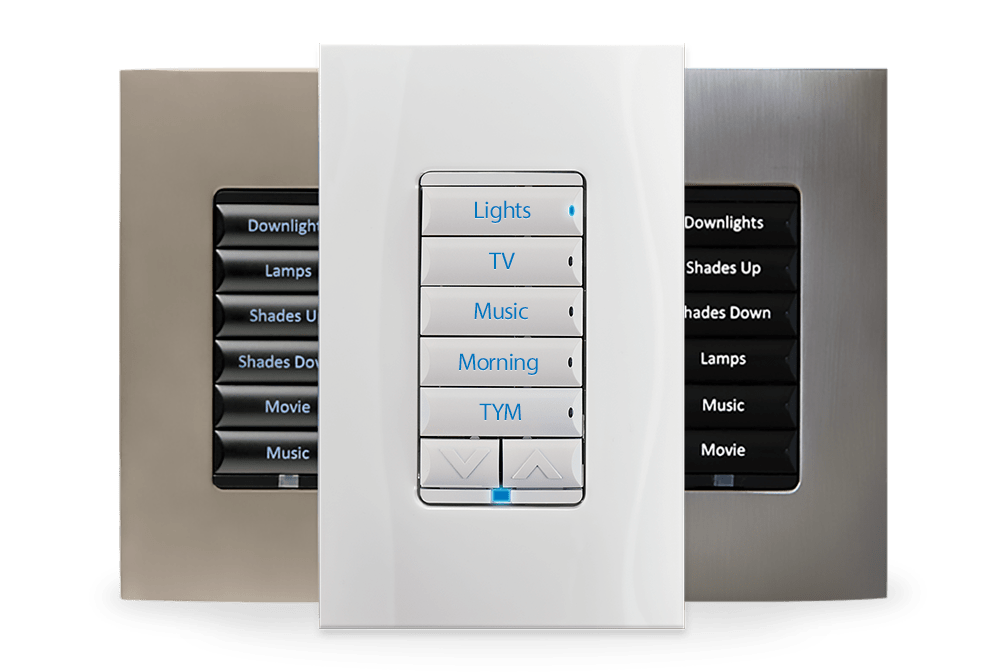
A keypad isn't simply a way to turn the lights on. It's part of the interior design.

Lutron offers some exceptional keypad designs, materials and finishes, and we think that makes a genuine difference in luxury properties.

There's something satisfying about a beautifully finished keypad that operates exactly as you'd expect.

And frankly, if you've invested heavily in the architecture and interiors of your home, the lighting controls shouldn't feel like an afterthought.

Is Lutron More Reliable Than Control4 Lighting?

We favour the architecture of Lutron's dedicated lighting systems, particularly wired solutions such as HomeWorks.

One of the advantages is that core lighting control can operate independently of the household IP network.

We like that separation.

Your household network supports televisions, streaming services, wireless devices and potentially hundreds of other connected products.

We don't necessarily want the reliability of your home's main lighting to depend on all of that working correctly.

To be clear, Control4 lighting doesn't simply stop working every time the internet goes down, and its local lighting controls can continue operating independently of cloud services.

The real distinction is the way the systems are designed and the dependencies they introduce.

Our preference is to keep essential building functions as independent as reasonably possible.

That philosophy has evolved through years of installing and maintaining smart homes.

Is Control4 Lighting Cheaper Than Lutron?

Generally, yes, and sometimes by a substantial amount.

For an indicative 20–30-circuit lighting installation, our experience suggests the following approximate budgets:

System Indicative cost
Control4 lighting £10,000
Lutron lighting £15,000

These are broad, experience-based project estimates rather than like-for-like fixed quotations. Pricing varies with the number and type of circuits, keypad specification, wiring, installation requirements and programming. VAT treatment would be confirmed in the quotation.

So we're potentially talking about a difference of around £5,000.

That's not insignificant.

And if you're working to a fixed budget, that saving could pay for quite a lot of additional technology elsewhere in the home.

We wouldn't automatically encourage somebody to spend more on Lutron if Control4 lighting met their needs perfectly well.

When Would We Recommend Control4 Lighting?

One obvious reason is the price.

Control4 can provide capable lighting control with attractive keypads, straightforward scene selection and integration with the rest of your smart home.

Some customers actually prefer the look of Control4 keypads, and that's perfectly reasonable.

If that's the style they want, we're happy to recommend it.

It's also worth remembering that lighting design itself is often more important than the logo on the keypad.

The best control system in the world won't rescue poorly positioned fittings, unsuitable drivers or badly planned lighting circuits.

A well-designed Control4 lighting installation can be considerably better than a badly designed Lutron one.

Can You Use Lutron Lighting With Control4?

Absolutely. In fact, it's one of our preferred approaches.

We often specify Lutron to control the lighting and use Control4 to bring the wider home together.

That means you can have Lutron keypads and lighting scenes alongside Control4 control of televisions, music, blinds and other technology.

From the homeowner's perspective, everything feels connected.

Behind the scenes, each system does the job it's particularly good at.

We don't believe every component of a smart home should come from the same manufacturer.

Sometimes combining the right products delivers a better result than staying within a single ecosystem.

Our Verdict: Lutron or Control4?

If we were specifying lighting for a high-end new build or major renovation, we'd generally lean towards Lutron.

We prefer the keypad finishes and the architecture of its dedicated lighting systems.

But we also recognise that Control4 offers excellent functionality at a lower price, and for plenty of properties, it's entirely appropriate.

Our recommendation is to spend money on good lighting design first, then choose the control system that best fits your property, budget and expectations.

And remember, you don't necessarily have to choose between the two.

Some of the most successful smart homes combine both.


Planning Smart Lighting for Your Home?

At Inspire Audio Visual, we design and install both Lutron and Control4 lighting systems.

Whether you're building a new property, renovating or upgrading existing lighting controls, we're happy to explain the practical differences.
Explore our Lutron lighting installation services.

AI & Smart Lighting Control: Lutron, Control4 & Crestron

The Future of Smart Lighting Control: How AI Could Change Lutron, Control4 and Crestron Homes

Smart lighting control has transformed how we experience our homes. But could artificial intelligence take things a step further, making our lighting more intuitive, more efficient and more personal?

For nearly two decades, we've been designing and installing smart home systems at Inspire Audio Visual. During that time, lighting control has evolved considerably. We've moved from banks of conventional switches to beautifully designed keypads, automated scenes and systems capable of integrating lighting with blinds, heating, security and entertainment.

Yet fundamentally, most lighting systems still rely on one thing: somebody telling them what to do.

You press a button, select a scene or rely on a pre-programmed schedule. The system responds exactly as it has been instructed.

Artificial intelligence could change that relationship.

Instead of simply responding to commands, the next generation of smart lighting control might begin to understand how we live, predict what we need and adapt our surroundings without constant intervention.

But is that genuinely useful innovation, or are we in danger of making something simple unnecessarily complicated?

Smart Lighting Control Today: Already Pretty Clever

Modern lighting control systems from manufacturers such as Lutron, Control4 and Crestron are already remarkably capable.

We can programme a single keypad button to transform an entire living space. Lighting levels adjust, curtains close, music starts playing and a room changes from a practical family environment into somewhere designed for entertaining.

Astronomical time clocks can adjust exterior lighting around sunset and sunrise. Presence sensors can automate corridors and bathrooms. Scheduled scenes can gradually change lighting throughout the day.

In projects such as our York Penthouse Smart Lighting installation, the objective is to bring sophisticated technology into a carefully considered interior without making it complicated to use.

For homeowners, that simplicity matters far more than the technical complexity behind the scenes.

But even the best programmed lighting system has limitations.

A lighting designer or programmer makes decisions about how the home should behave based on what they know at the time of installation. As the homeowner's routines change, those decisions might need adjusting.

This is where AI becomes interesting.

What Could AI Actually Bring to Smart Lighting?

Imagine a home that understands the difference between somebody getting up early for work, a relaxed Sunday morning and an evening entertaining friends.

Rather than relying entirely on fixed schedules, an intelligent lighting system could learn patterns of behaviour and suggest or automatically make appropriate adjustments.

It might notice that the kitchen is normally occupied earlier during the week, that the family prefers warmer lighting in the evenings or that particular rooms are rarely used at certain times.

Combined with occupancy information, daylight levels and other sensors, AI could help the lighting respond more naturally to the way the property is actually being used.

Of course, much of this can already be achieved using conventional programming. The difference would be the system's ability to adapt rather than requiring an engineer to modify every rule.

The technology would also need sensible boundaries. A homeowner should always be able to override the automation, and the system must remain predictable.

Nobody wants their kitchen lights making unexpected decisions because an algorithm thinks it knows better.

The Real Opportunity: Better Lighting Design

For me, one of the most interesting applications of AI isn't necessarily how a finished smart home operates.

It's how we design it in the first place.

A properly considered lighting design involves far more than deciding where to put downlights.

We need to understand the architecture, natural daylight, furniture layouts, decorative fittings, colour temperatures, circuit arrangements and the way different spaces will be used.

Then there are the technical drawings, load schedules, dimming requirements, keypad locations, scene programming and coordination with electricians, architects and interior designers.

On a typical substantial residential project, we might spend around 60 hours on the design and associated planning work.

Could AI reduce that by 50%?

I think there's a realistic opportunity for it to do so in parts of the process.

AI-assisted software could potentially analyse architectural drawings, help identify circuit arrangements, produce draft schedules and accelerate repetitive documentation.

That could give designers more time to concentrate on the areas where their experience genuinely adds value.

But there's an important distinction between producing a lighting plan and designing beautiful lighting.

AI might identify where a fitting could go. It doesn't necessarily understand why a particular architectural feature deserves emphasis, how light will interact with a textured wall or the emotional effect of a carefully balanced scene.

Those decisions still benefit enormously from human experience.

Will AI Replace Lighting Designers and Programmers?

I don't believe so, although I do think the roles will change.

Much of what makes a successful lighting installation comes from understanding the homeowner rather than simply understanding the equipment.

A family with young children will use its home differently from a couple who regularly entertain. Somebody who works unusual hours might need very different lighting behaviour from someone following a conventional routine.

A well-designed system accounts for those differences.

Our job isn't to install as much technology as possible. It's to understand the people who will live with it and then use the technology appropriately.

AI could become an extremely powerful design assistant. It might make documentation faster, identify potential issues earlier and help us explore different approaches before installation begins.

But it shouldn't replace the conversations, judgement and experience that make a home feel right.

In many respects, I'd welcome technology that takes repetitive engineering administration away from our designers.

The more time we can spend thinking about the finished experience, the better.

What Does This Mean for Lutron, Control4 and Crestron?

Manufacturers such as Lutron, Control4 and Crestron have spent years developing reliable, sophisticated control platforms.

The interesting question is how AI might complement these systems.

I don't necessarily see the future as replacing established lighting control infrastructure with an entirely new generation of AI-powered devices.

A properly engineered lighting system still needs dependable dimming, suitable wiring, reliable communication and physical controls that work every time.

Instead, I suspect much of the intelligence could eventually sit above the existing infrastructure.

AI could potentially analyse how lighting scenes are used, recommend improvements, adapt schedules and help commissioning engineers refine system behaviour.

It might even allow homeowners to describe a desired atmosphere in natural language and have the system suggest an appropriate lighting scene.

That said, these are possibilities rather than features we can assume are currently available across the manufacturers' residential systems.

And reliability must remain the priority.

If your internet connection fails, you should still be able to turn your lights on.

The Homeowner Shouldn't Have to Think About the Technology

One concern I have with the smart home industry is our tendency to become fascinated by what technology can do rather than asking whether the homeowner needs it.

We've seen this with touchscreens, complicated interfaces and systems that offer hundreds of functions when most people only use a handful.

AI could easily become another example.

A homeowner doesn't necessarily want a conversation with their house every time they enter the kitchen.

They want the lighting to feel right.

Sometimes the most intelligent solution is still a beautifully designed keypad with three or four clearly labelled buttons.

The challenge for manufacturers and installers will be introducing greater intelligence without compromising the simplicity that makes a system enjoyable to live with.

In my view, the best smart home technology is the technology you barely notice.

Could AI Make Smart Lighting More Affordable?

If AI reduces the time required for some design, documentation and programming tasks, there could eventually be a financial benefit for homeowners.

On larger projects, engineering and design time represents a meaningful proportion of the overall cost.

Reducing repetitive work could improve efficiency and allow installers to spend more time refining the finished installation.

But that doesn't mean lighting design should become a fully automated, low-cost commodity.

A poorly designed lighting scheme doesn't become good simply because it was produced quickly.

The value comes from combining better tools with the experience to use them correctly.

For a professionally designed home, I'd rather see AI help us deliver a better outcome than simply make everything cheaper.

Our View: The Future Is Intelligent, but It Still Needs to Be Human

AI will almost certainly influence the way we design, programme and operate smart homes over the coming years.

Some of its most useful applications might be relatively unexciting from a consumer perspective: faster drawings, improved engineering coordination, more efficient commissioning and better analysis of how homes are actually used.

But those improvements could have a significant impact on the finished experience.

For homeowners, the objective should remain exactly the same as it is today.

Beautiful lighting, simple controls and a home that responds naturally to the people living in it.

At Inspire Audio Visual, we'll continue exploring new technologies as they emerge, but our approach won't change.

We start with the homeowner, the architecture and the way a space should feel.

Then we choose the technology that delivers it.

AI might change some of the tools we use along the way.

It shouldn't change that principle.

Planning a Smart Lighting Project?

Whether you're building a new home, renovating an existing property or considering an upgrade to an established lighting system, getting the design right from the beginning makes a significant difference.

At Inspire Audio Visual, we design and install intelligent lighting systems using Lutron, Control4 and Crestron, working alongside homeowners, architects and interior designers throughout Yorkshire, Cheshire and London.

Explore our lighting design and control services or contact our team to discuss your project.

Call Us

0330 4303490 or 0203 1515075

Email Us

inspireme@inspire-av.com

What We Do Differently: Transforming a Belgravia Smart Home

What We Do Differently: Transforming a Belgravia Smart Home

Smart homes can be complicated.

The homeowner should never have to know that.

That principle sits behind much of what we do at Inspire Audio Visual. A well-designed smart home may contain networking equipment, lighting controllers, AV distribution, televisions, wireless access points and automation systems working together behind the scenes.

But for the homeowner — or a guest staying in the property — using it should be straightforward.

We were recently asked to review the technology within a multi-million-pound apartment in Belgravia, London, after the owners had experienced a number of smaller but persistent problems with the lighting, televisions and network.

What we found is a good example of the difference between technology that has simply accumulated over time and a smart-home system that has been properly engineered, documented and supported.

What we inherited

At first glance, much of the system worked.

But looking behind the scenes revealed several problems.

The communications rack contained a mixture of network equipment and associated hardware with cabling running across the front of the rack.

Labelling was limited, making it difficult for an engineer attending the property to immediately understand what equipment served which part of the home.

That creates a larger problem than appearance alone.

If several engineers support a property over a number of years, the system needs to be understandable to everyone who works on it.

Without good documentation and labelling, every visit risks becoming another investigation into what previous engineers have changed.

We were also seeing equipment within the existing infrastructure contributing to network reliability issues.

For a modern smart home, that matters enormously.

Lighting, televisions, streaming services, automation processors and mobile devices are increasingly dependent on the network underneath them.

A smart-home system can only be as reliable as the infrastructure supporting it.

Lighting had evolved rather than been designed

The lighting controls told a similar story.

Different styles of switch had been installed throughout the property, creating an inconsistent appearance and user experience.

Some of the controls were battery operated and had become intermittent.

There was also no structured maintenance programme or comprehensive record of the changes that had been made to the system over time.

Behind the switches, the lighting equipment was electrically safe, but the organisation and finish didn't reflect the standard we would expect within a property of this level.

This wasn't a question of replacing technology simply because it was old.

The objective was to create something that would be more reliable, easier to understand and considerably easier to support in the future.

Rebuilding the network properly

The first step was to reorganise the communications rack and network infrastructure.

The cabling was tidied and appropriately routed.

Equipment was clearly identified.

Connections were labelled.

The network architecture was documented.

The result is a rack that another Inspire engineer can attend in the future and immediately understand.

That might sound like a small detail, but it changes the way a system can be supported.

Instead of spending the beginning of every visit working out how the system has been assembled, the engineer can concentrate on the issue the client actually called about.

More importantly, the network can now be managed remotely by our team.

This allows us to investigate connectivity problems, check equipment status and remotely reboot certain devices without automatically needing to send an engineer to the property.

In many cases, that means an issue can be resolved before a site visit is even required.

A professional lighting solution from Rako

The existing lighting controls were replaced with a professionally designed Rako lighting control system.

Rather than simply replacing one switch with another, we looked at how the client actually uses each room.

The front-end controls were then finished using Corston toggle switches, with individual functions professionally engraved.

This gave the apartment a much more consistent appearance while retaining the traditional aesthetic that suited the interior.

But the bigger improvement is usability.

Instead of switches whose function isn't immediately obvious, controls can now be clearly identified.

Scenes allow several lighting circuits to work together rather than requiring the homeowner to adjust multiple lights individually.

A room might therefore offer simple choices such as:

Home. Away. Stairs. Hallway.

Behind those simple controls, the lighting system may be doing considerably more.

That distinction is important.

Complexity belongs behind the wall

There is a temptation with smart homes to demonstrate how clever the technology is.

We generally take the opposite approach.

The clever part should happen in the background.

A homeowner shouldn't require a manual to turn the lights on.

Guests shouldn't be frightened to press a switch because they don't know what it will do.

And watching television shouldn't require somebody to understand which amplifier, network switch or HDMI device is involved.

The technology underneath can be complicated. The experience shouldn't be.

That principle guided the changes throughout this apartment.

Designed to be maintained

One of the biggest differences between a one-off smart-home installation and a professionally managed system is what happens after the engineers leave.

Technology changes.

Internet providers change equipment.

Firmware updates are released.

Televisions and streaming devices are replaced.

New equipment is added.

Problems will occasionally occur.

That is why documentation, remote management and maintenance are part of the system rather than an afterthought.

The equipment within this property is now organised and labelled so that any member of our engineering team can understand it.

We also maintain a record of the system and the changes made to it.

For the client, that means there is a company taking responsibility for the technology rather than simply a collection of individual products installed around the property.

The client's reaction

The most important result isn't how much tidier the equipment rack looks.

It is whether the home is better to live with.

The client's response after completing the upgrade summed that up particularly well:

“I love the update. We'd been having lots of small issues for years with the lighting and TVs. Inspire have not only addressed these, but also provided a solution that looks much more attractive, gives us far better control of the lighting scenes within each room, and means guests are no longer scared to press a button.”

That final point is probably the best measure of the project.

The system became more sophisticated behind the scenes while becoming simpler for the people actually using it.

What we do differently

For us, smart-home integration isn't simply about installing Control4, Rako, networking equipment or another piece of technology.

It is about understanding how all of those systems interact.

It means thinking about:

  • how the system will be supported five years from now;
  • whether another engineer can understand the installation;
  • whether the network can be diagnosed remotely;
  • whether controls make sense to someone visiting the property for the first time;
  • whether future equipment can be incorporated easily; and
  • whether the standard of the hidden installation matches the standard of the finished home.

Good smart-home engineering is often invisible.

But when it is done properly, the homeowner notices the difference every day.


Planning a smart-home upgrade?

Inspire Audio Visual designs, installs, upgrades and supports smart-home systems across London, Yorkshire and throughout the UK.

Whether you are planning a new Control4 smart home, upgrading an existing installation, improving your home network, replacing an unreliable lighting system or simply want someone to take long-term responsibility for your technology, our team can assess the existing installation and recommend the best way forward.

Call Us

0330 4303490 or 0203 1515075

Email Us

inspireme@inspire-av.com

Lutron HomeWorks Takeover in Cheshire | Mobberley Case Study

Lutron HomeWorks Takeover in Cheshire: When the Product Isn’t the Problem

We come across this more often than we should.

A client has invested heavily in a premium smart lighting system, usually from a very good manufacturer such as Lutron, but somewhere between specification, installation and handover, the project has simply been allowed to drift.

The result?

A very expensive lighting system that the homeowner describes as “too complicated.”

Most of the time, the technology isn't actually complicated.

The project just hasn't been finished properly.

We recently saw exactly this while taking over the technology systems at an award-winning home in Mobberley, Cheshire, close to Knutsford

A Lutron HomeWorks system left unfinished for six years

The property uses a Lutron HomeWorks QS lighting control system with seeTouch keypads throughout.

There are 24 keypads across the house.

And after six years, every single one was still unengraved.

Blank buttons.

On a premium lighting control system.

This is particularly frustrating because keypad engraving is not some extravagant upgrade that needs to be added years later. On the relevant Lutron seeTouch products, custom engraving is included as part of the keypad provision.

It is one of the final details that turns a lighting control system from a collection of buttons into something intuitive.

Yet somehow, six years after the house was completed, it had never been done.

“This smart lighting system is too complicated”

We hear this complaint regularly.

But there is an important distinction:

Smart lighting shouldn't be complicated to use.

The engineering behind it can absolutely be complicated. Selecting the correct dimming technology, ensuring compatibility with LED fittings, programming loads correctly and creating smooth transitions between scenes all require experience.

But the principle for the homeowner is actually very simple.

Get the lighting design right.

Engineer the fittings so they dim properly.

Create useful scenes around how the client actually lives.

Show the client how to make simple adjustments.

And finally, engrave the buttons.

Because you can create Party, Entertain, Evening and Relax scenes all day long, but when Grandma walks into the room she still needs to know how to turn the lights on.

She probably isn't looking for the Party scene.

Hopefully.

Taking over the Mobberley system

The homeowner originally contacted Inspire AV because they wanted us to replace the existing ELAN control system with Control4.

As part of our initial survey, we also reviewed the existing Lutron HomeWorks lighting system.

There was nothing fundamentally wrong with Lutron.

In fact, replacing it would have been completely unnecessary.

The system simply wasn't delivering the experience it should have been.

So rather than selling the client another lighting control system, we concentrated on improving the one they already owned.

Reprogramming the lighting scenes

One of the first things we noticed was that the All On scenes throughout the property were bringing lighting loads up to 100%.

We adjusted these to approximately 85%.

Visually, this was still more than adequate as a bright lighting level, but it removes the unnecessary habit of constantly driving every fitting at maximum output.

We also reprogrammed scenes throughout the house to provide better dimming control and more flexibility between different lighting states.

This is where a good smart lighting system starts to earn its place.

It shouldn't simply turn groups of lights on and off.

It should change the character of the room.

Good lighting control should help accentuate the architecture, artwork, furniture, finishes and views while adapting to the way the homeowner uses the space throughout the day.

If you've spent a significant amount of money installing a Lutron HomeWorks system and every scene still feels like various versions of “lights on”, something has been missed.

And then we engraved the buttons

All 24 Lutron seeTouch keypads had been left without engraving since the original installation.

As part of taking over the project, we decided to use some of our own Lutron marketing allowance to finally get the keypad engraving completed for the client at no cost.

The keypads now have clear, useful functions such as:

Home

Entrance

Gate

Away

It sounds like a minor detail.

It isn't.

One of the most important parts of smart-home design is removing uncertainty.

A guest shouldn't need instructions.

A cleaner shouldn't need the app.

A grandparent shouldn't need to understand what lighting scene was programmed six years ago.

The controls should explain themselves.

An award-winning Cheshire home deserved better

The property itself is Antrobus New Hall Farm on Faulkners Lane in Mobberley, a contemporary home near Knutsford that won Best Residential Build at the Northern Design Awards 2019.

It is exactly the sort of property where good lighting control should complement the architecture rather than simply provide convenient switching.

The client is planning further refurbishment over the coming 12 months, and we have already started discussing ways to add considerably more lighting detail.

That includes better illumination of artwork, additional architectural lighting and improvements to the exterior and garden lighting.

The existing Lutron infrastructure gives us an excellent platform to build from.

It didn't need replacing.

It needed someone to care about finishing it properly.

The problem isn't always Lutron

This is an important point.

When we take over an existing system, our first reaction isn't:

“Rip it out and start again.”

Lutron HomeWorks is an exceptional lighting control platform when it has been designed, engineered, programmed and commissioned properly.

The same applies to Control4, Crestron and most premium home technology.

Often the manufacturer gets blamed for an experience that was actually created by the integrator.

A homeowner says:

“Lutron is too complicated.”

What they sometimes really mean is:

“Nobody ever finished my Lutron system properly or showed me how it should work.”

Those are very different problems.

Smart lighting design should start with the room, not the keypad

Our approach to smart lighting is straightforward.

The lighting design comes first.

There is little point investing in a sophisticated control system if the underlying lighting scheme doesn't create exceptional scenes within the property.

Then we look at how each fitting needs to dim so transitions are smooth and consistent.

From there, we build scenes around the client's routine and the different ways each space is used.

Morning.

Cooking.

Dining.

Entertaining.

Evening.

Away.

We then show the homeowner how to make simple adjustments themselves.

And yes, we engrave the buttons.

The technology should disappear into the background.

That is when a smart home starts to feel genuinely smart.

Lutron HomeWorks support and takeovers in Cheshire

Inspire AV provides Lutron HomeWorks design, programming, support and system takeovers throughout Cheshire, including:

Mobberley, Knutsford, Alderley Edge, Wilmslow, Prestbury, Hale, Bowdon and Tarporley.

We can review an existing Lutron system whether the original installer is no longer involved, the project was never properly completed, the programming no longer suits the way you live or you simply want to understand what could be improved.

We also regularly take over wider smart-home systems, including projects where Lutron lighting is integrated with Control4 or Crestron.

Still looking at blank Lutron keypads?

If your Lutron seeTouch keypads were never engraved as part of the original installation, speak to us.

Where the system and keypad type allow it, we are currently happy to review the engraving requirements and provide the keypad engraving free of charge as part of an eligible Lutron takeover or support project.

We can also carry out a wider system health check covering programming, dimming performance, lighting scenes and integration with the rest of the property.

A premium lighting system should make your home easier to live in.

Not give you 24 blank buttons to figure out.

Want to find out more about Smart Homes and how Inspire Audio Visual can Help, contact us below

Call Us

0330 4303490 or 0203 1515075

Email Us

inspireme@inspire-av.com

Smart Home Support Harrogate | Control4, Crestron & KNX

Sometimes a homeowner chooses to change their smart home dealer.

The relationship may have broken down, the level of service may have dropped once the main project was completed, or the system may simply never have worked as reliably as it should.

Other times, that decision is taken out of the customer’s hands.

Recently, we have seen several businesses within the smart home industry close their doors, including a prominent local name in Harrogate that went into liquidation earlier this month.

It is never good news when a local business closes. There are employees, suppliers and families affected by it. However, it can also leave customers in a difficult position, particularly when they have invested heavily in a Control4, Crestron, KNX, lighting control or home cinema system and no longer know who is going to maintain it.

The important thing to understand is that your investment is not necessarily stranded.

Can another smart home company take over your system?

In most cases, yes.

At Inspire AV, we regularly take over smart home and home cinema systems that were originally designed and installed by other companies.

There are several reasons a customer may contact us:

  • Their original installer has stopped trading
  • Support disappeared after the project was completed
  • The relationship with the existing dealer has broken down
  • The system has become unreliable
  • Changes and updates take too long
  • Nobody has explained how the system works
  • The customer has moved into a property with an existing smart home system
  • The original programming files or system information are missing

Taking over a smart home system is not simply a case of arriving at the property, changing a few settings and hoping for the best.

The first job is understanding exactly what has been installed.

Our approach to taking over an existing system

Our approach is straightforward.

We establish what equipment you have, what is currently working, what needs attention and what can realistically be repaired or improved.

We are not going to walk through the door and immediately tell you that everything needs replacing.

A proper takeover will usually begin with a system health check. This may include reviewing:

  • The main smart home control system
  • System processors and controllers
  • Lighting control
  • Home cinema equipment
  • Multi-room audio and video
  • Network and Wi-Fi infrastructure
  • CCTV, door entry and security integration
  • Heating and climate control
  • Equipment racks and ventilation
  • Remote access and manufacturer accounts
  • Existing programming and project files

From there, we can explain where you currently stand.

Some systems may only need relatively minor programming changes or network improvements. Others may have equipment that is no longer supported and needs to be replaced gradually.

The point is to give you an honest picture before recommending what happens next.

Control4 support in Harrogate

Control4 is one of the most widely installed smart home platforms in the UK. It can control televisions, music, lighting, heating, security, blinds, gates and other connected systems through a single interface.

However, Control4 is a dealer-supported platform. This means homeowners will normally need an authorised and experienced dealer to carry out programming, add new equipment and provide ongoing technical support.

If your previous installer has stopped trading or is no longer supporting your property, Inspire AV can assess the existing installation and discuss taking over the system.

Our engineers can help with:

  • Control4 programming and updates
  • Adding or replacing televisions and audio equipment
  • Lighting and scene changes
  • Remote control and touchscreen issues
  • Network problems affecting system performance
  • Adding streaming services and sources
  • Integrating new rooms or equipment
  • Ongoing Control4 maintenance and support

You can read more about our Control4 installation and support services.

We have worked with Control4 for more than 15 years and understand both the programming side of the platform and the wider infrastructure required to make it work reliably.

That wider infrastructure is important. A smart home system is only as dependable as the network, cabling and connected equipment supporting it.

Crestron support in Harrogate

Crestron systems are often installed in larger or more complex properties where the homeowner requires a high level of integration and customisation.

A Crestron system may control entertainment, lighting, heating, blinds, security, access control and other technology throughout the property.

Because Crestron systems can be heavily customised, taking one over requires a proper technical assessment. We need to understand how the system was programmed, what equipment is installed and whether the original project files are available.

Our Crestron support can include:

  • Assessing existing Crestron programming
  • Troubleshooting unreliable system operation
  • Updating interfaces and controls
  • Replacing outdated equipment
  • Adding new televisions, audio systems or rooms
  • Reviewing network and system infrastructure
  • Integrating lighting, heating and security
  • Providing longer-term maintenance and support

Find out more about Inspire AV as a Crestron Home installer and support company.

Not every issue requires a complete redesign. Once we have assessed the system, we can explain which parts remain useful, what should be repaired and where investment would make the biggest difference.

KNX system support

KNX is different from Control4 and Crestron.

It is an open building automation standard commonly used to manage lighting, heating, climate control, blinds and other building services.

A property may use KNX for its core building controls while Control4 or Crestron manages the entertainment, home cinema and wider user interface.

This can be an effective approach, but it also means the company supporting the property needs to understand how the different systems communicate with each other.

As KNX Accredited System Designers, Inspire AV can assess existing KNX installations, review the ETS project information and identify problems with programming, devices or integration.

We can assist with:

  • Existing KNX system audits
  • KNX programming and commissioning
  • Lighting and heating control problems
  • Adding new rooms, circuits or functions
  • Recovering and documenting project information
  • Integrating KNX with Control4 or Crestron
  • Connecting KNX to home cinema and multi-room AV systems
  • Ongoing system maintenance

Read more about our KNX smart home design, programming and support.

The benefit of working with a company that understands KNX, Control4, Crestron and professional AV is that you do not need separate companies blaming each other whenever something stops working.

We can look at the property as one connected system.

Long-term support matters

The installation is only the beginning of a smart home relationship.

Televisions get replaced. Streaming services change. Wi-Fi standards develop. Manufacturers update their software and homeowners change how they use their rooms.

A system that worked well five years ago may need adjustments to keep it reliable and relevant today.

This is why customers should consider the long-term stability and support structure of the company looking after their home, not just the initial installation price.

Inspire AV has been designing, installing and supporting smart homes across Yorkshire for more than 16 years.

We have a strong pipeline of work and recently extended the lease on our premises for another five years. We have no intention of going anywhere.

That does not mean every support issue will be resolved instantly or that every piece of older equipment can be saved. It means we will be honest about what we find, explain the available options and remain accountable for the work we carry out.

Smart home and home cinema support across Harrogate

We support homeowners in Harrogate and the surrounding areas, including Knaresborough, Ripon, Pannal, Spofforth, Boroughbridge, Wetherby and across North Yorkshire.

Whether your original installer has stopped trading, your existing relationship is no longer working or your smart home has never performed as expected, we can help you understand the next step.

Our engineers can assess your existing Control4, Crestron, KNX, lighting, networking or home cinema installation and provide clear recommendations for repair, improvement and ongoing support.

Visit our dedicated page for smart home and home cinema support in Harrogate or contact Inspire AV to arrange an initial conversation about your system.

Call 0330 430 3490 or use the enquiry form on our website.

What should I ask a smart home installer?

Before appointing a professional smart home company, we would recommend asking:

  1. Why have you selected this particular smart home platform?
  2. Do you install more than one automation system?
  3. Who supports my smart home after installation?
  4. What are the likely ongoing maintenance costs?
  5. Can another authorised dealer take over the system in the future?
  6. Which parts of the system can I troubleshoot myself?
  7. What happens if my internet connection fails?
  8. How have you designed the system around my family's routines?
  9. Are there simpler alternatives to any of the systems you've specified?
  10. What cabling should we install now for future technology?

The answers are important.

But pay attention to the questions the installer asks you too.

If you've spent two hours discussing processors, touchscreens and product specifications but nobody has asked how you actually live, that's a problem.

Why do some homeowners say, "I'd never have a smart home again"?

This is probably the most uncomfortable question for our industry.

There is a generation of homeowners who have owned professional smart home systems and genuinely wouldn't have another one.

Not necessarily because of the cost.

Because of the admin.

Emails.

Phone calls.

Chasing support.

Waiting for an engineer.

Discovering the original installer no longer supports the system.

Or having technology fail at exactly the wrong moment.

Nobody cares how technically impressive their video distribution system is when an important football match is starting and they can't turn the television on.

At that moment, the smart home has become another job.

We believe the professional smart home industry has to be honest about this.

Technology should give homeowners more time.

It shouldn't create more admin.

This is why the relationship with your smart home installer doesn't end when the system is commissioned.

For a large or complex smart home, ongoing support is part of the product.

So, do you need a professional smart home installer?

For most people?

No.

Consumer smart home products are better than they've ever been and many homeowners can create useful automation themselves.

But if you're building or renovating a large property, integrating multiple systems or simply value your time more than learning how to configure technology, professional smart home design can make a huge difference.

Just give some real thought to what you actually want first.

Don't start with brands.

Don't start with products.

Think about your life.

What frustrates you in your current home?

Where does your family spend its time?

Do you entertain?

Do you love music?

Does lighting and interior design matter deeply to you?

Then find a smart home installer who wants to understand the answers.

Because the best smart homes aren't the ones with the most technology.

They're the ones that feel like they were designed specifically for the people living in them.

Just don't buy a beige one.

Want to find out more about Smart Homes and how Inspire Audio Visual can Help, contact us below

Call Us

0330 4303490 or 0203 1515075

Email Us

inspireme@inspire-av.com

How to Integrate Social Media with Smart Home Lighting

Social Media Light Notifications

We love to play with light and how it interacts with our life here at Inspire AV HQ, one of the simplest ways to do this is by applying colour to notify you of social media and on-line communication. I like the fact just using some simple components bought from the highstreet I can go through my day without checking my content every 5 minutes to see what’s going on in Inspire AV’s world.

What do you require?

Phillips Hue lighting –    This can be bought from most major retailers, and can provide you with a very cost effective way of lighting automation. LightwaveRF and Wemo Switches also work but we find Phillips Hue gives the best effect as it allows for different colours dependent on the notification.

Social Media Account – We all have one of these nowadays but if you don’t you can still do the same thing with emails.

IFTTT Account –               IFTTT gives you creative control over the products and apps you love, using recipes you can make your apps work in harmony to enrich your life, you can set up an account here and download the app on most platforms https://ifttt.com/.

Below is a step-by-step guide:

On how to light your room green when receiving a mention from twitter.

  • Step 1: Open IFTTT app and login, select the new Recipe icon in the top right of the screen.
  • Step 2: Click on the ADD new recipe icon.
  • Step 3: Select what you ACTION you would want to trigger the  EVENT,    in this case I will select twitter as the ACTION.
  • Step 4: So Twitter becomes the action but you still require to tell IFTTT what notification you would like it to look out for, click the plus sign to add this.
  • Step 5: I would like the EVENT to happen when we receive a mention on twitter… we like to be very responsive on our social media in the office and at home but like to be reminded in a gentle way
  • Step 6: Repeat the process with the EVENT, Click the red plus sign to add the app you would like to trigger the EVENT.
  • Step 7: Select Phillips Hue as your triggered EVENT.
  • Step 8: Select what you would like the EVENT to do. In my case change the Lounge LAMP to green.
  • Step 9: You need to select the light you wish to control and what colour you would like select with the light.

Note: you must have your Phillips Hue set up and working off the app before you can control from IFTTT, also only certain lights in the Phillips Hue range have colour changing capabilities.

  • Step 10: You have created your first Lighting Notification with IFTTT, click the finish button and enjoy your lighting display.
This image has an empty alt attribute; its file name is control4-announcements-including-os-2-10.png

    Name (required)

    Email (required)

    Phone

    Area of interest

    Home CinemaSmart HomeLighting ControlAudio Visual

    Type of installation

    Price Margin (Leave blank or estimate if unsure)

    If you know the number of rooms within the property, please select from the options below.

    If you have any floor plans of the property you would like to submit, please attach below.

    This site is protected by reCAPTCHA and the Google
    Privacy Policy and Terms of Service apply.